The deadlift is one of the best lifts there is for building full-body strength, but you’ve got two main ways to pull from the floor: sumo and conventional. They look different, they feel different, and they load your body in different places.
Neither one is better across the board. The right pull for you comes down to your build, your goals, and which version you can load and recover from. This article walks through the differences, the pros and cons of each, the muscles they hit, and how to decide which one to put your time into.
Table of Contents
- 1 What’s the Main Difference Between Sumo and Conventional Deadlifts?
- 2 Sumo vs. Conventional Deadlift: Pros and Cons
- 3 Exercise Form
- 4 Muscles Used
- 5 When to Do Each
- 6 Common Form Mistakes
- 7 Sumo vs. Conventional Deadlift: Which One Is Better for You?
- 8 Frequently Asked Questions
- 9 Other Exercise Comparison Posts
- 9.1 Romanian Deadlift vs Deadlift: Which is Better?
- 9.2 Barbell Curl vs Dumbbell Curl: Benefits & Differences
- 9.3 Hack Squat vs Barbell Back Squat: Differences and Which to Do
- 9.4 Barbell Row vs T-Bar Row: Differences, Pros, and Cons
- 9.5 Flat vs. Incline Bench Press: Which is Better?
- 9.6 Preacher Curl vs Concentration Curl: Which is Better?
- 9.7 Trap Bar Deadlift vs. Barbell Deadlift: Is One Better?
- 9.8 Floor Press vs. Bench Press: Pros, Cons, and Differences
- 9.9 Leg Press vs Hack Squat: Differences & Benefits
- 9.10 Hammer Curls vs Bicep Curls: Which is Better?
- 9.11 Lying Leg Curl vs Seated Leg Curl: Pros & Cons
- 9.12 Leg Press vs. Squat: Differences, Pros, and Cons
What’s the Main Difference Between Sumo and Conventional Deadlifts?
The difference is your stance and where you grip the bar. In a sumo deadlift you take a wide stance with your feet pointed out and your hands inside your knees. In a conventional deadlift your feet are about shoulder-width and your hands grip outside your knees.
That one change has knock-on effects. Sumo gives you a more upright torso and a shorter distance to move the bar, and it leans more on your quads, adductors, and glutes. Conventional is more of a hip hinge with a longer range of motion, and it puts more work on your hamstrings, spinal erectors, and back.
Sumo vs. Conventional Deadlift: Pros and Cons
Sumo Deadlift Pros
- Shorter range of motion, so the bar travels less distance.
- More upright torso, which means less shear stress on the lower back.
- Hits the quads, adductors, and glutes harder than conventional.
- Often a better fit for lifters with a long torso and shorter arms.
- Easier on the lower back for many people, so it can be a good option if conventional beats you up.
Sumo Deadlift Cons
- Hardest right off the floor, where the leverage is worst.
- Demands real hip mobility to get into a good start position.
- More technically fussy, so it takes longer to feel natural.
- Small setup errors, like letting the knees cave, kill the lift fast.
Conventional Deadlift Pros
- More natural to learn, so most beginners get the hang of it faster.
- Usually stronger off the floor thanks to better starting leverage.
- Builds the posterior chain, the hamstrings, glutes, erectors, and back.
- Carries over well to general strength and athletics.
- Needs less hip mobility than sumo.
Conventional Deadlift Cons
- Longer range of motion, so the bar has farther to travel.
- Puts more stress on the lower back, especially at higher volumes.
- The lockout can be tough if your hips or glutes are a weak point.
- Rounding under heavy weight is a bigger risk than with sumo.
Exercise Form
How to Do a Sumo Deadlift Correctly
- Take a wide stance with your toes pointed out 30 to 45 degrees and your shins close to the bar.
- Set the bar over your midfoot, almost touching your shins.
- Drop your hips, reach down, and grip the bar with your hands inside your knees and your arms vertical.
- Take a big breath, brace your core, push your knees out, and pull the slack out of the bar with your chest up.
- Drive your feet down and out through the floor and stand the weight up, keeping the bar close to your body.
- Lock out your hips at the top, then lower the bar under control.
This video from Calgary Barbell shows how to perform the sumo deadlift.

How to Do a Conventional Deadlift Correctly
- Set your feet about shoulder-width with the bar over your midfoot.
- Hinge down and grip the bar just outside your knees.
- Bring your shins to the bar, set your hips higher than you would for sumo, and flatten your back.
- Take a breath, brace, engage your lats, and pull the slack out of the bar.
- Push the floor away and drag the bar up your legs, letting your hips and shoulders rise together to lockout.
- Hinge back down under control to return the bar to the floor.
This video from Jeff Nippard shows how to perform the conventional deadlift.
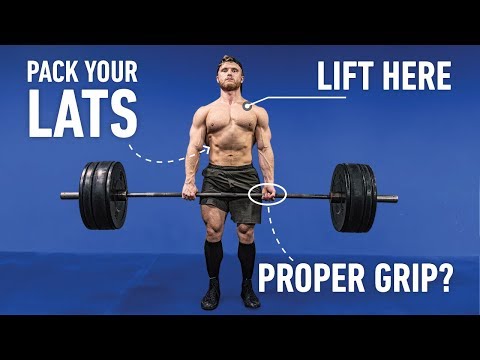
For a deeper breakdown, see our full deadlift form guide.
Muscles Used
Sumo Deadlift Muscles Used
The major muscles worked by the sumo deadlift are:
- Quadriceps
- Adductors (inner thighs)
- Glutes
The minor muscles worked by the sumo deadlift are:
- Trapezius and upper back
- Forearms
- Spinal erectors
Because your torso stays more upright, sumo asks less of your spinal erectors than conventional does.
Conventional Deadlift Muscles Used
The conventional deadlift is a posterior chain movement. The major muscles worked by the conventional deadlift are:
- Hamstrings
- Glutes
- Spinal erectors
The minor muscles worked by the conventional deadlift are:
- Lats
- Trapezius
- Forearms
If your goal is a stronger, thicker back and bigger hamstrings, conventional does more of that work.
See our deadlift muscles worked guide for the full picture.
When to Do Each
When to Do a Sumo Deadlift
Go sumo if you have a long torso and shorter arms, if conventional pulling bothers your lower back, or if you want more quad and adductor involvement. If you compete in powerlifting and you simply pull more weight with sumo, that’s reason enough to make it your main lift.
When to Do a Conventional Deadlift
Pull conventional if you’re after posterior chain and back development, if you want the most carryover to general strength and athletics, or if you’re a beginner learning to deadlift for the first time. It’s the version most people should learn before adding sumo.
Common Form Mistakes
Sumo Deadlift Mistakes
- Letting the knees cave inward instead of pushing them out over your toes.
- Shooting the hips up first so the lift turns into a stiff-legged pull.
- Starting with the hips too low, as if it were a squat.
- Not opening the hips and pulling the slack out before you drive.
This video from Juggernaut Training Systems shows what these sumo deadlift mistakes look like and how to fix them.

Conventional Deadlift Mistakes
- Rounding the lower back under heavy weight.
- Letting the bar drift away from your body instead of dragging it up your legs.
- Jerking the bar off the floor instead of pulling the slack out first.
- Leaning back and hyperextending at lockout.
This video from Jeff Nippard covers the most common conventional deadlift mistakes and how to fix them.

Sumo vs. Conventional Deadlift: Which One Is Better for You?
Neither pull is better in a vacuum, so pull the one you’re stronger and more comfortable with. Your build matters: longer arms and a shorter torso usually favor conventional, while a longer torso and shorter arms or a cranky lower back often favor sumo.
Goals matter too. For back and hamstring development, conventional wins. For more quad and adductor work and an easier pull on the spine, sumo wins. If you compete, test both and put your numbers behind whichever you pull more weight with.
If you’re not competing and just want to get strong, I’d start with conventional to build a base, then add sumo as a variation once your hinge is solid. You don’t have to marry one. Plenty of lifters run one as their main lift and use the other as an accessory.
Want to keep comparing pulls? See deadlift vs Romanian deadlift and trap bar deadlift vs barbell deadlift, or grab a swap from our deadlift alternatives.
Frequently Asked Questions
Is the sumo deadlift cheating?
No. Sumo is a legal lift in every major powerlifting federation. It has a shorter range of motion, but it’s harder off the floor, so it isn’t easier just different. The leverages favor different body types.
Which deadlift lets you lift more weight?
It depends on the lifter. Many people pull slightly more with sumo because of the shorter range of motion, but plenty are stronger conventional. The only way to know is to train both and compare your true top sets.
Is sumo easier on the lower back?
Usually yes. The more upright torso reduces the load on your spinal erectors, which is why lifters with back issues often prefer it. The trade-off is that sumo demands more hip mobility to set up well.
Can I train both sumo and conventional?
Yes, and it’s a smart way to round out your strength. A common setup is to run one as your main deadlift and use the other as a variation or accessory to shore up weak points.
Other Exercise Comparison Posts
If you enjoyed this post, check out our comparisons of other popular exercises below.