The sumo deadlift is a deadlift variation where you take a stance wider than shoulder width, turn your toes out, and grip the bar with your hands inside your knees instead of outside them. That wide stance drops your hips lower before you pull, which shortens the distance the bar has to travel and puts your torso in a more upright position than a conventional deadlift ever will. Because your hips and knees are both bent more at the start, your quads and adductors do a lot more of the work pulling the weight off the floor, while your lower back handles less shear force than it does in a conventional pull.
You might want an alternative for a few reasons. Sumo pulling isn’t kind to tight hips, and if your adductors or groin don’t love that wide stance under load, you’ll feel it fast. Some gyms don’t have the platform space for a proper sumo setup, and a crowded rack makes the wide stance awkward to work around. Or maybe your lower back has been the limiting factor on your pulling and you want a lift that trains the same hip drive and quad-adductor stimulus without loading your spine as hard.
I picked the 8 alternatives below because each one keeps some piece of what makes a sumo deadlift work, whether that’s the wide stance and toed-out adductor stretch or the heavy hip-dominant pull, across a mix of barbell, kettlebell, cable, and machine equipment. Some of these are close enough to run in the exact same program slot. Others are worth adding on top to build size or to train around an injury. I’ll tell you when to use each one and exactly how to do it.
Table of Contents
- 1 The 8 Best Sumo Deadlift Alternatives
- 2 Reasons to Choose a Sumo Deadlift Alternative
- 3 Muscles Worked by the Sumo Deadlift
- 4 FAQs
- 4.1 What’s the closest alternative to a sumo deadlift?
- 4.2 Can I build the same muscle without ever pulling sumo?
- 4.3 What’s the best sumo deadlift alternative for bad hips or groin?
- 4.4 What’s the best sumo deadlift alternative at home?
- 4.5 Why does the sumo deadlift bother my hips or lower back?
- 4.6 How many pulling exercises should I do per week?
- 5 Key Takeaways
- 6 Other Alternative Exercises
- 6.1 The 10 Best Romanian Deadlift Alternatives
- 6.2 The 12 Best Pull-Up Alternatives
- 6.3 The 10 Best Bulgarian Split Squat Alternatives
- 6.4 The 10 Best Hack Squat Alternatives
- 6.5 The 10 Best Dumbbell Pullover Alternatives
- 6.6 The 10 Best Leg Extension Alternatives
- 6.7 The 9 Best Seated Cable Row Alternatives (2026)
- 6.8 The 9 Best Leg Press Alternatives
- 6.9 The 9 Best Pendlay Row Alternatives
- 6.10 The 10 Best Plank Alternatives
- 6.11 The 8 Best Hammer Curl Alternatives
- 6.12 The 8 Best Incline Bench Press Alternatives
- 6.13 The 8 Best Decline Bench Press Alternatives
- 6.14 The 9 Best T-Bar Row Alternatives
- 6.15 The 8 Best Ab Rollout Alternatives
The 8 Best Sumo Deadlift Alternatives
- Trap Bar Deadlift
- Dumbbell Sumo Squat
- Kettlebell Sumo Deadlift
- Conventional Deadlift
- Barbell Hip Thrust
- Wide-Stance Leg Press
- Romanian Deadlift
- Cable Pull-Through
1. Trap Bar Deadlift
When to Perform the Trap Bar Deadlift
This is the closest swap I’ve got for a sumo deadlift. You stand inside the bar instead of behind it, so your torso stays upright and your hips sit low right from the start, close to the same position a sumo stance puts you in. Use it when you want to keep loading heavy but your gym platform is too narrow for a wide sumo stance, or when your grip or lower back need a shorter, more forgiving range of motion. I usually program it for 3 to 5 sets of 5 to 8 reps as a main lift, in the same slot a sumo deadlift would sit in.
How to Perform the Trap Bar Deadlift
- Step inside a trap bar so it surrounds you, feet about hip to shoulder width apart.
- Reach down and grip the handles, keeping your shins close to the bar without touching it.
- Set your chest up and drop your hips down, similar to how low a sumo stance would put you.
- Drive through your whole foot to stand up, keeping the bar path straight and your torso upright.
- Push your hips back and bend your knees to lower the bar back down under control.
Equipment: trap bar (hex bar), plates, platform.
This video from Men’s Health Muscle shows how to perform the trap bar deadlift with proper form.

Tips for the Trap Bar Deadlift
- Keep the bar path vertical. Don’t let the handles drift forward as you stand up.
- Push your feet through the floor rather than just pulling with your arms.
- Use the high handle position if your hips or lower back need a shorter pull.
- Brace your core hard before you break the bar off the floor, the same way you would on a sumo pull.
For a full breakdown of how this stacks up against a straight bar pull, see our trap bar deadlift vs barbell deadlift comparison.
2. Dumbbell Sumo Squat
When to Perform the Dumbbell Sumo Squat
Use this when you want the exact wide stance and toed-out adductor stretch a sumo deadlift trains, without loading your spine at all. It’s the swap I’d hand a beginner who’s still learning what a good sumo setup feels like, since the dumbbell keeps the load light and the pattern true. I’ll run this for 3 sets of 12 to 15 reps as a warm-up before a heavier sumo or trap bar deadlift, or as a standalone accessory on a lower body day.
How to Perform the Dumbbell Sumo Squat
- Hold a dumbbell vertically with both hands cupping the top plate, letting it hang in front of your chest.
- Set your feet wider than shoulder width and turn your toes out to roughly 45 degrees.
- Sit your hips straight down between your legs, keeping your chest up and the dumbbell close to your body.
- Squat until your thighs are at least parallel to the floor, then drive back up through your heels.
Equipment: one dumbbell.
This video from Testosterone Nation shows how to perform the dumbbell sumo plie squat.

Tips for the Dumbbell Sumo Squat
- Keep your knees tracking out over your toes the whole rep, not caving inward.
- Sit straight down instead of back, since the wide stance changes the bar path from a regular squat.
- Add a 1 to 2 second pause at the bottom to build comfort in that wide, deep position.
- Once one dumbbell stops being a challenge, switch to a barbell sumo squat or a heavier kettlebell held goblet style.
3. Kettlebell Sumo Deadlift
When to Perform the Kettlebell Sumo Deadlift
This is the direct kettlebell equivalent of a sumo deadlift, and it’s the one I reach for when I’m training at home or coaching someone new to the pattern. The kettlebell sits on the floor between your feet instead of in front of them, so you get the same wide stance and hip hinge without needing a bar or a platform. Use it for 3 sets of 10 to 15 reps, or as a light warm-up before a heavier barbell pull.
How to Perform the Kettlebell Sumo Deadlift
- Place a kettlebell on the floor between your feet, set wider than shoulder width with your toes turned out.
- Squat down and grip the kettlebell handle with both hands, keeping your chest up and your back flat.
- Drive through your feet and extend your hips to stand up, keeping the kettlebell close to your body.
- Push your hips back and bend your knees at the same time to lower it back to the floor.
Equipment: one kettlebell.
This video from ScottHermanFitness shows how to perform the kettlebell sumo deadlift.

Tips for the Kettlebell Sumo Deadlift
- Keep the kettlebell close to your shins on the way up, don’t let it swing forward.
- Squeeze your glutes hard at the top instead of hyperextending your lower back to finish the rep.
- Raise the kettlebell on a couple of plates if your hips can’t get low enough to reach it flat on the floor.
- Run this as your warm-up sets before a heavier sumo or trap bar deadlift. It grooves the exact same hip hinge pattern.
4. Conventional Deadlift
When to Perform the Conventional Deadlift
The conventional deadlift trades the wide sumo stance for a hip-width one, so your torso leans forward more and your hamstrings and lower back pick up work your quads and adductors were doing before. Use it when you want to build pulling strength generally rather than re-create the sumo pattern specifically, or when a crowded platform doesn’t leave you room for a wide stance. I’d program 3 to 5 sets of 3 to 6 reps if you’re training it as a main lift.
How to Perform the Conventional Deadlift
- Stand with your feet about hip width apart, the bar over the middle of your foot.
- Grip the bar just outside your shins, hands outside your knees.
- Push your hips down and back until your shins touch the bar and your chest is up.
- Drive through the floor and extend your hips and knees together to stand tall, keeping the bar close to your body.
- Reverse the motion under control to lower the bar back to the floor.
Equipment: barbell, plates, platform.
This video from PureGym shows how to perform the conventional deadlift correctly.

Tips for the Conventional Deadlift
- Keep the bar scraping your shins and thighs on the way up.
- Brace your core and take a full breath before you break the bar off the floor.
- Expect a longer pull than sumo, since your hips start higher and the bar travels further.
- If your lower back is the limiting factor here, build the top half of the pull first with rack pulls; see our rack pulls vs deadlifts comparison for how they differ.
If you’re looking for alternatives to the conventional pull instead, see our full deadlift alternatives guide.
5. Barbell Hip Thrust
When to Perform the Barbell Hip Thrust
Use this when you want the same glute-driven lockout a sumo deadlift finishes with, without putting any real load through your spine. It’s a compression-free way to overload hip extension directly, so I like it for lifters coming back from a lower back tweak or anyone who wants heavier glute work than a deadlift alone provides. I’d program 3 to 4 sets of 8 to 12 reps, either as a main lift on a lower body day or as an accessory after a deadlift.
How to Perform the Barbell Hip Thrust
- Sit on the floor with your upper back against a bench and a loaded, padded barbell rolled over your hips.
- Plant your feet flat on the floor, shins roughly vertical at the top of the movement.
- Drive through your heels and extend your hips until your body forms a straight line from shoulders to knees.
- Squeeze your glutes hard at the top, then lower back down under control.
Equipment: barbell, bench, hip thrust pad (a folded mat works in a pinch).
This video from Buff Dudes Workouts shows how to perform the barbell hip thrust.

Tips for the Barbell Hip Thrust
- Tuck your chin and keep your ribs down. Don’t hyperextend your lower back at the top of the rep.
- Set the bench height so your thighs finish parallel to the floor at lockout.
- Use a thick pad. A bare bar across your hip crease is miserable once the weight climbs.
- Pause for a full second at the top of every rep instead of bouncing through it.
If a hip thrust bothers your hips or you don’t have a bench, see our glute bridge alternatives for other ways to overload hip extension.
6. Wide-Stance Leg Press
When to Perform the Wide-Stance Leg Press
This keeps the wide stance, quad, and adductor emphasis a sumo deadlift trains, but on a machine with zero spinal loading. Use it when your lower back needs a break but your legs don’t, or as a high-rep finisher after your main pulling work is done. I usually run 3 sets of 10 to 15 reps here, since the machine lets you push closer to failure without any balance or bracing demands to worry about.
How to Perform the Wide-Stance Leg Press
- Sit in the leg press machine and set your feet on the platform wider than shoulder width, toes turned out to roughly 30 to 45 degrees.
- Release the safety catches and lower the platform until your knees approach your chest, without your lower back lifting off the pad.
- Press through your whole foot to extend your legs, stopping just short of locking your knees out hard.
- Lower back down under control and repeat.
Equipment: leg press machine.
This video from Luke Briggs shows how to perform the wide-stance leg press.

Tips for the Wide-Stance Leg Press
- Keep your lower back flat against the pad the whole set. If it rounds off at the bottom, you’ve gone too deep.
- Turn your toes out to match your knee angle, so your knees track in the same direction your toes point.
- Don’t lock your knees out hard at the top of each rep.
- If your hips or groin were the reason you’re avoiding sumo deadlifts, start with a narrower stance here and widen it out gradually over a few weeks.
Want more leg press variations? See our leg press alternatives guide.
7. Romanian Deadlift
When to Perform the Romanian Deadlift
The Romanian deadlift trades sumo’s wide stance and quad-adductor emphasis for a deep hamstring stretch from a standard, hip-width setup. Use it when you already run a sumo deadlift as your main pull and want a hamstring-focused accessory, or on a day when a wide stance just isn’t an option. I’d program 3 sets of 8 to 10 reps, usually later in a session after the heavier pulling work is done.
How to Perform the Romanian Deadlift
- Hold a barbell at hip height with an overhand grip just outside your thighs.
- Set your feet about hip width apart with a slight bend in your knees.
- Push your hips back and lower the bar down the front of your legs, keeping your back flat and the bar close to your body.
- Stop once you feel a deep stretch in your hamstrings, usually around mid-shin, then drive your hips forward to stand back up.
Equipment: barbell (dumbbells work too).
This video from E3 Rehab shows how to perform the Romanian deadlift with proper form.

Tips for the Romanian Deadlift
- Keep a soft bend in your knees throughout instead of locking them out.
- Push your hips back first. Don’t just fold forward at the waist.
- Stop the descent the moment your lower back starts to round, not before.
- Keep the bar dragging along your thighs and shins the whole way down and back up.
Want more hamstring-focused options? Check out our Romanian deadlift alternatives, or see our full deadlift vs Romanian deadlift comparison for how the two stack up.
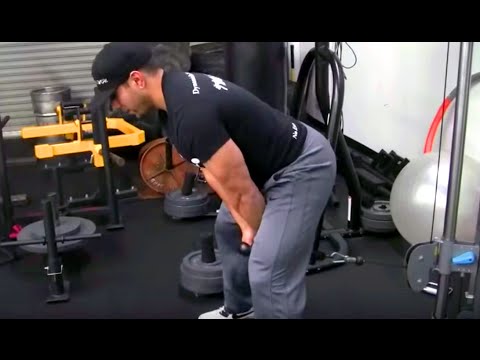
8. Cable Pull-Through
When to Perform the Cable Pull-Through
This is the safest, most beginner-friendly hip hinge on the list. The cable keeps constant tension on your hips and hamstrings without ever asking your spine to support a bar, which makes it a good teaching tool before you load a heavier sumo or conventional pull. I run this for 3 sets of 12 to 15 reps as a warm-up or a light finisher, not as a strength builder.
How to Perform the Cable Pull-Through
- Attach a rope to a low pulley and straddle the cable, facing away from the machine.
- Grab the rope between your legs with both hands and walk forward until you feel tension.
- Push your hips back and hinge forward, letting the rope travel back between your legs with your knees staying soft.
- Drive your hips forward to stand up, squeezing your glutes at the top.
Equipment: cable machine, low pulley, rope attachment.
This video from Chris and Eric Martinez shows how to perform the cable pull-through.
Tips for the Cable Pull-Through
- Keep the movement in your hips, not your lower back. Your spine shouldn’t round or arch much through the rep.
- Let the rope travel back far enough that you feel a real stretch in your hamstrings.
- Stand far enough from the machine that the cable stays under tension through the whole rep.
- Use this to teach a hip hinge to anyone new to deadlifting before you put a bar in their hands.
For more cable-only hip and glute work, see our cable glute exercises roundup.
Reasons to Choose a Sumo Deadlift Alternative
There are a few good reasons to swap the sumo deadlift for one of the options above. None of them are a downgrade. Each one trains the same hip drive or quad-adductor stimulus sumo relies on, and a few of them let you train around limitations sumo just doesn’t handle well.
- Your hips or groin don’t love a wide stance. The trap bar deadlift and Romanian deadlift keep you in a narrower, more natural stance while still training the same hip hinge pattern.
- You want less load on your spine. The hip thrust, wide-stance leg press, and cable pull-through all train the same muscles with little to no compressive load on your lower back.
- You don’t have a barbell. The kettlebell sumo deadlift and dumbbell sumo squat need next to nothing, so a missed gym day doesn’t have to be a missed pull day.
- You want to build raw pulling strength. The trap bar deadlift and conventional deadlift let most lifters load heavier than a sumo pull usually allows.
- Your quads and adductors have stalled. A fresh angle like the wide-stance leg press or dumbbell sumo squat gives those muscles a new stimulus after months on the same lift.
Muscles Worked by the Sumo Deadlift
Your quads sit at the front of your thigh and work harder in a sumo deadlift than a conventional one, since your knees start more bent and stay more bent through the pull. Your adductors, the muscles running down your inner thigh, load hard too, since the wide stance and turned-out toes put them under tension for the entire lift. The sumo deadlift and its alternatives train these muscle groups, though which one gets hit hardest shifts depending on the exercise.
- Quadriceps: the front of your thigh, loaded harder in sumo than in a conventional pull because of the deeper knee bend at the start. The trap bar deadlift, dumbbell sumo squat, and wide-stance leg press all hit this hard.
- Adductors: your inner thigh, the muscle group most specific to a wide stance. The dumbbell sumo squat and kettlebell sumo deadlift train these directly.
- Glutes: the primary hip extensor on every exercise on this list, loaded hardest at lockout on the hip thrust and Romanian deadlift.
- Hamstrings: active throughout the pull on all of these, but especially on the Romanian deadlift and cable pull-through, where the stretch at the bottom is the whole point.
- Erector spinae: your lower back muscles, which stabilize your spine on every pulling variation, though the hip thrust and leg press ask far less of them than a barbell pull.
- Traps and lats: stabilize the bar or weight against your body on every deadlift variation, keeping the load close through the full range.
- Grip and forearms: work isometrically to hold onto the bar, dumbbell, or kettlebell on every loaded pull.
For more on how deadlift variations compare muscle for muscle, see our deadlift muscles worked guide.
FAQs
What’s the closest alternative to a sumo deadlift?
The trap bar deadlift. It keeps the upright torso and shortened pull range sumo is known for, since standing inside the bar drops your hips into nearly the same starting position a wide sumo stance does. Most lifters can also load it just as heavy as their sumo pull, sometimes heavier.
Can I build the same muscle without ever pulling sumo?
Yes. Your quads, adductors, and glutes grow from being loaded through a real range of motion with enough volume over time, and they don’t care whether that load comes from a trap bar, a leg press, or a single dumbbell. Any exercise on this list will build those muscles if you progress the weight or reps over time.
What’s the best sumo deadlift alternative for bad hips or groin?
The Romanian deadlift and hip thrust are usually the friendliest, since neither one asks your hips into that wide, externally rotated position under load. If your hips are tight, work on hip mobility separately and reintroduce a wide stance gradually instead of forcing it under a heavy bar.
What’s the best sumo deadlift alternative at home?
The kettlebell sumo deadlift if you’ve got one kettlebell, and the dumbbell sumo squat if you’ve got a single dumbbell. Between the two, you can train the wide stance and the hip hinge with real quad and adductor drive, all without ever needing a barbell or a platform.
Why does the sumo deadlift bother my hips or lower back?
Usually it’s a mobility issue. Your hips need to open into external rotation to get into a good sumo stance, and if that range isn’t there, your lower back or groin ends up compensating for it. Try the leg press or hip thrust to keep training the same muscles while you work on hip mobility on the side.
How many pulling exercises should I do per week?
One heavy pull, whether that’s a sumo deadlift, conventional deadlift, or trap bar deadlift, is usually enough on its own for a session. Add a Romanian deadlift or hip thrust later in the week if you want more hamstring or glute volume without taxing your lower back a second time.
Key Takeaways
If you want the closest swap that still lets you load heavy, go with the trap bar deadlift. If your hips or groin are the reason you’re avoiding sumo in the first place, start with the hip thrust or wide-stance leg press instead, since neither one puts your hips into that wide external rotation under load. Training at home with just a kettlebell or a dumbbell, the kettlebell sumo deadlift and dumbbell sumo squat will still build real strength in the same muscles sumo trains. Pick based on your equipment and how your hips feel under load, then progress it the same way you’d progress a sumo deadlift: more weight or more reps over time.
Other Alternative Exercises
If you enjoyed this post, check out our other roundups of the best alternatives for other exercises.