The pendulum squat is a plate loaded machine that swings your body through a wide arc as you squat, so the resistance angle changes throughout the rep instead of staying fixed the way it does on a leg press. You stand on an angled platform with a padded shoulder yoke or chest pad holding your torso in place, then bend your knees to sink into a deep squat before driving back up. That arc keeps real tension on your quads through the whole range, especially in the bottom position where a barbell squat starts to lose it, and it’s why the pendulum squat has become one of the go-to machines for quad size in bigger gyms.
You’ll probably need an alternative at some point, mostly because not many gyms actually have one. The pendulum squat machine is expensive and eats up serious floor space, so you’ll find it at bigger commercial gyms and specialty strength gyms, not the average globo gym or a home setup. Maybe your gym has one but there’s always a line for it, or you’re on the road and need a hotel gym substitute. Or you’ve been running pendulum squats for months and your quads have adapted, so a different angle or a free weight option would do more for your legs right now.
I picked these 8 based on how well they keep that same supported, quad-dominant loading the pendulum squat gives you, whether they’re a machine, a belt-loaded setup, or a straight barbell or dumbbell lift. Some are close to a plug and play swap you can run in the exact same slot in your program, and others ask a bit more of your own stabilizers since there’s no machine doing the balancing for you. I’ll tell you when to reach for each one and exactly how to perform it.
Table of Contents
- 1 The 8 Best Pendulum Squat Alternatives
- 2 Reasons to Choose a Pendulum Squat Alternative
- 3 Muscles Worked by the Pendulum Squat
- 4 FAQs
- 4.1 What’s the closest alternative to a pendulum squat?
- 4.2 Can I build quad size without a pendulum squat machine?
- 4.3 What’s the best pendulum squat alternative for a bad lower back?
- 4.4 What’s the best pendulum squat alternative at home?
- 4.5 Why do pendulum squats feel harder than a leg press?
- 4.6 How many quad-focused exercises should I do per leg day?
- 5 Key Takeaways
- 6 Other Alternative Exercises
- 6.1 The 8 Best Ab Rollout Alternatives
- 6.2 The 10 Best Overhead Press Alternatives
- 6.3 The 10 Best Romanian Deadlift Alternatives
- 6.4 The 12 Best Pull-Up Alternatives
- 6.5 The 9 Best Pendlay Row Alternatives
- 6.6 The 10 Best Hack Squat Alternatives
- 6.7 The 9 Best T-Bar Row Alternatives
- 6.8 The 10 Best Leg Extension Alternatives
- 6.9 The 10 Best Lat Pulldown Alternatives
- 6.10 The 10 Best Box Jump Alternatives
- 6.11 The 9 Best Lunge Alternatives
- 6.12 The 8 Best Hammer Curl Alternatives
- 6.13 The 7 Best Deadlift Alternatives
- 6.14 The 10 Best Bench Press Alternatives
- 6.15 The 10 Best Lying Leg Curl Alternatives
The 8 Best Pendulum Squat Alternatives
- Hack Squat
- V-Squat
- Belt Squat
- Leg Press
- Smith Machine Squat
- Front Squat
- Goblet Squat
- Bulgarian Split Squat
1. Hack Squat
When to Perform the Hack Squat
This is the closest swap on the whole list. Both machines are angled, plate loaded, and lock your torso in place with a pad while your legs do all the work. The difference is the hack squat’s sled runs along a fixed angle instead of the pendulum’s swinging arc, so the resistance feels flattest near the top and heaviest near the bottom. Use it when your gym doesn’t have a pendulum squat but does have a standard hack squat, or when you just want a nearly identical quad stimulus without waiting in line for one specific machine. I’d program 3 to 4 sets of 8 to 12 reps, in the same slot a pendulum squat would sit in.
How to Perform the Hack Squat
- Load the sled with plates and step onto the platform, positioning your shoulders under the pads.
- Set your feet shoulder-width apart and slightly forward of your hips, then unrack the sled by straightening your legs.
- Bend your knees to lower the sled until your thighs are at least parallel to the platform.
- Drive through your whole foot to press back up to the starting position without locking your knees out hard.
Equipment: hack squat machine.
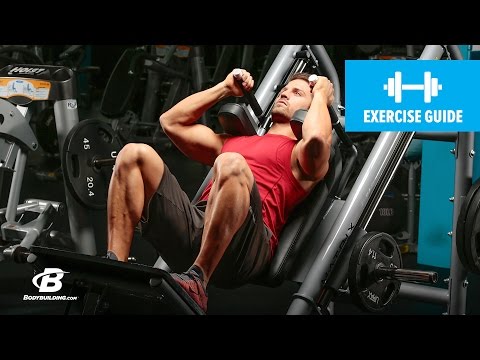
This video from Bodybuilding.com shows how to perform the hack squat correctly.
Tips for the Hack Squat
- Keep your feet slightly forward of your hips so your knees can travel over your toes without your heels lifting.
- Don’t lock your knees out hard at the top. Stop just short so your quads keep the tension.
- Start with a moderate stance width and adjust after a session or two based on where you feel the most work.
- Use the same depth every set so you can trust your progress from week to week.
For other close swaps, see our hack squat alternatives, or read our hack squats vs back squats breakdown.
2. V-Squat
When to Perform the V-Squat
A V-squat machine uses a pivoting arm with a shoulder or chest pad, so your hips travel through an arc close to what you get on a pendulum squat. It’s a nearly identical stimulus, though you’ll find it in fewer gyms than a hack squat. Reach for this when your gym has a V-squat but not a pendulum squat, or when you want to rotate between two similar machines to keep your quads guessing. I’d run 3 sets of 10 to 12 reps here.
How to Perform the V-Squat
- Set the pad height so it rests comfortably on your shoulders or upper chest, depending on the machine.
- Step your feet onto the platform, positioned under or slightly in front of your hips.
- Bend your knees to lower your body along the machine’s arc until your thighs reach parallel or a little below.
- Press through your feet to extend your knees and hips back to the top.
Equipment: V-squat machine (commonly a Hammer Strength brand).
This video from Live Lean TV Daily Exercises shows how to perform the machine V-squat.

Tips for the V-Squat
- Keep your weight balanced through your whole foot instead of rising onto your toes as you press up.
- Don’t let your knees cave inward near lockout, especially on your heaviest sets.
- If your gym has both a pendulum squat and a V-squat, alternate between them every few weeks to give your quads a new angle.
- Start a size lighter than you would on a hack squat. The arc changes the felt resistance in a way that surprises most lifters the first time.
3. Belt Squat
When to Perform the Belt Squat
A belt squat loads the weight through a belt around your hips instead of your spine, so your torso stays upright and free rather than pinned against a pad like it is on a pendulum squat. Reach for this when your lower back needs a rest from axial loading but you still want real quad volume, or when you’re working around a back tweak and squatting under a bar is off the table for now. I’d program 3 to 4 sets of 10 to 15 reps.
How to Perform the Belt Squat
- Attach a belt squat harness around your hips and stand on the raised platform straddling the weight.
- Attach plates or the machine’s weight stack to the belt through its chain or cable.
- Bend your knees and hips to lower into a squat, letting the weight hang below the platform.
- Press through your feet to stand back up, keeping your torso tall the whole rep.
Equipment: belt squat machine, or a dip belt, a raised platform, and a loading pin if your gym doesn’t have a dedicated unit.
This video from Nexus Performance Australia shows how to use a belt squat machine.

Tips for the Belt Squat
- Hold the machine’s handles lightly for balance, not to help you lift the weight.
- Keep your chest up and avoid leaning forward, since that shifts work off your quads and onto your hips.
- Go deep. Since your spine isn’t loaded, you can usually squat lower here than you would with a barbell on your back.
- If your gym doesn’t have a belt squat machine, a dip belt looped through a band anchored under a platform gets you close.
4. Leg Press
When to Perform the Leg Press
A leg press sled moves along a straight track rather than an arc, but it shares the back support and the ability to load your legs without balancing a bar. Use it when your gym doesn’t have any angled quad machine at all, since a leg press is in almost every commercial gym. Set your feet low and close together on the platform to bias your quads over your glutes and hamstrings. I’d program 3 to 4 sets of 10 to 15 reps.
How to Perform the Leg Press
- Sit in the machine with your back flat against the pad and your feet on the platform about shoulder width apart.
- Release the safety catches and lower the platform until your knees reach close to a 90 degree angle.
- Press through your feet to extend your legs without locking your knees out hard.
- Control the platform back down under tension for the next rep.
Equipment: leg press machine, either the 45 degree sled or a horizontal seated version.
This video from ScottHermanFitness shows how to perform the seated leg press.

Tips for the Leg Press
- Place your feet low on the platform and closer together to shift more of the work onto your quads.
- Keep your lower back flat against the pad. If it lifts off at the bottom, you’ve gone deeper than your hips can control.
- Don’t lock your knees out at the top of each rep.
- Add a 1 to 2 second pause at the bottom occasionally to build strength out of the deepest part of the range.
See how this compares in our leg press vs hack squat guide, or browse other leg press alternatives if this one doesn’t fit your setup either.
5. Smith Machine Squat
When to Perform the Smith Machine Squat
A Smith machine bar runs along a fixed vertical path, kind of like the pendulum squat’s guided motion, minus the arc and the torso support. You’ll feel more of the stabilizing demand yourself here, but the bar can’t drift off path, which makes it a safe way to push a set closer to failure without a spotter. Set your feet forward of your hips to bias your quads the same way the pendulum squat’s forward knee travel does. I’d program 3 to 4 sets of 8 to 12 reps.
How to Perform the Smith Machine Squat
- Set the bar at upper chest height and position it across your upper back, not your neck.
- Unrack the bar by rotating your wrists, then step your feet out in front of your hips.
- Bend your knees to lower into a squat, letting your torso lean back slightly against the fixed bar path.
- Drive through your feet to press back up to the starting position.
Equipment: Smith machine.
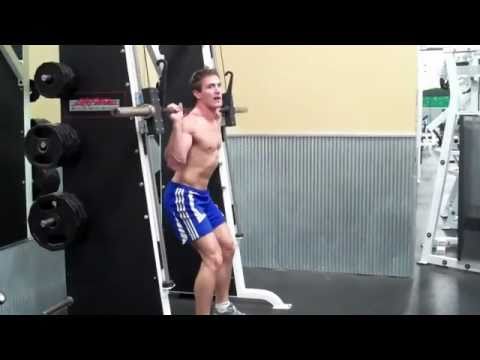
This video from ScottHermanFitness shows how to perform the Smith machine squat.
Tips for the Smith Machine Squat
- Set your feet further forward than you would on a free barbell squat, since the fixed bar path means your torso has to lean back to stay balanced.
- Set the safety catches just below your bottom position so you can bail out of a hard set.
- Don’t rush the lockout. Control it the same way you control the descent.
- Raise your heels slightly on a small plate if your ankles are tight, so you can sit deeper without your heels lifting.
For more machine-based leg options, see our gym machines for legs roundup.
6. Front Squat
When to Perform the Front Squat
This is the heaviest, most technical free weight option on the list. Holding the bar in front forces your torso upright, which pushes your knees far forward the same way a pendulum squat’s arc does, and that keeps your quads working through the whole rep. Use it once you’re comfortable with squat mechanics and want a true free weight swap instead of another machine. I’d program 3 to 5 sets of 5 to 8 reps for strength, or 8 to 10 reps if size is the goal.
How to Perform the Front Squat
- Rack a barbell across the front of your shoulders, using either a clean grip or a crossed-arm grip.
- Keep your elbows up high so the bar stays supported on your shoulders instead of rolling forward.
- Bend your hips and knees to squat down, keeping your torso as upright as you can.
- Drive through your feet to stand back up, keeping your elbows high the whole rep.
Equipment: barbell and rack. A pair of heavy dumbbells held at your shoulders works as a substitute.
This video from Jeff Nippard shows how to perform the front squat.

Tips for the Front Squat
- Keep your elbows up. If they drop, the bar rolls forward and the set is over.
- Expect to squat noticeably less than your back squat, since the upright torso puts more demand on your quads and your upper back.
- A front squat harness takes the wrist and elbow mobility demand out of the equation if a clean grip bothers your wrists.
- Brace hard before you descend. A front squat with a loose midsection folds forward fast.
For the full breakdown of what this lift builds, see our guide to front squat benefits and muscles worked, or check our front squat alternatives if the bar position doesn’t agree with you.
7. Goblet Squat
When to Perform the Goblet Squat
This is the lightest and most beginner-friendly free weight option here. Holding the weight at your chest keeps your torso upright with almost no learning curve, which makes it a good starting point if you’re new to quad-dominant squatting patterns, or a solid warmup and finisher if you’re already advanced. I’d run 3 sets of 10 to 15 reps.
How to Perform the Goblet Squat
- Hold a dumbbell or kettlebell vertically against your chest, cupping the top end with both hands.
- Set your feet about shoulder width apart with your toes turned out slightly.
- Bend your knees and hips to squat down, letting your elbows travel between your knees at the bottom.
- Drive through your feet to stand back up.
Equipment: one dumbbell or kettlebell.
This video from ScottHermanFitness shows how to perform the goblet squat.

Tips for the Goblet Squat
- Keep the weight close to your chest the whole rep instead of letting it drift forward.
- Sink as low as your hips and ankles allow. The goblet position naturally keeps your torso upright even at full depth.
- Use your elbows as a depth check. Once they touch the inside of your knees, that’s about as deep as you need to go.
- Move up to a heavier dumbbell once 15 reps feels easy for all 3 sets, rather than sticking with the same weight indefinitely.
8. Bulgarian Split Squat
When to Perform the Bulgarian Split Squat
This one works one leg at a time through a deep range close to what you’d get on a pendulum squat, and training unilaterally exposes any side to side imbalance a two-legged machine can hide. Use it as an accessory after your main quad lift, or as your main quad movement on a day you don’t have machine access at all. I’d program 3 sets of 8 to 12 reps per leg.
How to Perform the Bulgarian Split Squat
- Stand a couple feet in front of a bench and rest the top of one foot on it behind you.
- Hold a dumbbell in each hand, or hold one at your chest, and set your front foot far enough forward that your knee stays over your ankle at the bottom.
- Bend your front knee to lower your back knee toward the floor.
- Drive through your front foot to stand back up.
Equipment: a bench and a pair of dumbbells. A barbell across your back works too, once bodyweight and dumbbells stop being a challenge.
This video from ATHLEAN-X shows how to perform the Bulgarian split squat with proper form.

Tips for the Bulgarian Split Squat
- Keep most of your weight on your front foot. Your back foot is there for balance, not to help you push.
- Set your front foot further forward than feels natural at first. Too short a stance turns this into a quad-dominant lunge into knee pain territory.
- If balance is the limiting factor before your quads are, hold onto something with one hand until you build up stability.
- Match your reps and weight on both legs, and don’t skip your weaker side.
For more single-leg options, our Bulgarian split squat alternatives guide covers other unilateral swaps.
Reasons to Choose a Pendulum Squat Alternative
There are a handful of good reasons to swap the pendulum squat for one of the options above, and none of them are a downgrade. Each one still trains your quads through a long, loaded range. For more single-joint quad work beyond this list, see our leg extension alternatives guide.
- You don’t have access to a pendulum squat machine. Hack squats, V-squats, and leg presses cover the same supported, quad-dominant pattern at gyms that don’t carry the specific unit.
- Your lower back needs a break from axial loading. Belt squats load through your hips instead of your spine, so you keep training your quads without stacking weight on your back.
- You want to build raw strength with a barbell. Front squats let you load quad-dominant work heavier and carry that strength over to your regular squat total.
- You’re training at home or on the road. Goblet squats and Bulgarian split squats need almost no equipment and still hit your quads hard.
- Your quads have stalled on the pendulum squat. A Smith machine squat or V-squat gives your legs a new angle to adapt to without abandoning the supported, quad-first setup that made the pendulum work in the first place.
Muscles Worked by the Pendulum Squat
The pendulum squat and its alternatives are all built around the same job, loading your quads through a long, deep range while your torso stays supported or upright. Here’s how the load breaks down across the muscles involved:
- Quadriceps (rectus femoris, vastus lateralis, vastus medialis, vastus intermedius): the primary target on every exercise here, loaded hardest in the bottom position where free weight squats tend to lose tension.
- Glutes: a secondary mover, most active out of the bottom of the rep as your hips extend.
- Hamstrings: work isometrically to stabilize your knees and control the descent, though they take a back seat to your quads on all 8 of these.
- Adductors: assist through the range, especially if your stance runs wider than shoulder width.
- Calves: stabilize your ankles and shins as your knees travel forward over your toes.
- Lower back: gets very little direct work on the pendulum squat, the hack squat, the V-squat, the leg press, and the belt squat, since the machine or belt supports your torso instead of asking your spine to stabilize a bar. Free weight options like the front squat, goblet squat, and Bulgarian split squat ask more of your lower back and core to keep you upright.
FAQs
What’s the closest alternative to a pendulum squat?
The hack squat. Both machines are angled, plate loaded, and lock your torso in place with a pad while your legs do all the work. The main difference is the hack squat’s sled runs a fixed angle instead of the pendulum’s swinging arc. If your gym has a V-squat too, that’s an equally close second option.
Can I build quad size without a pendulum squat machine?
Yes. Your quads grow from being loaded through a long range with enough volume over time, and they don’t care whether that load comes from a pendulum squat, a hack squat, a barbell, or a dumbbell. Any exercise on this list will build real quad size if you train it hard and progress the weight or the reps over time.
What’s the best pendulum squat alternative for a bad lower back?
The belt squat. It loads your hips through a belt instead of stacking weight on your spine, so you can still train your quads hard without your lower back taking any of the load. The leg press is a solid second option, since your back stays supported against the pad the whole set.
What’s the best pendulum squat alternative at home?
The goblet squat if you’ve got a single dumbbell, and the Bulgarian split squat once you want more of a challenge and have a bench or a sturdy chair to prop your back foot on. Between the two, you can cover your whole quad without a single machine.
Why do pendulum squats feel harder than a leg press?
The arc. A leg press sled runs on a straight track, so the resistance keeps roughly the same feel throughout the rep. A pendulum squat’s arm swings on a pivot, so the resistance angle changes as you descend, and that keeps real tension on your quads in the bottom position instead of letting up the way a straight track machine can.
How many quad-focused exercises should I do per leg day?
One or two heavy compound options plus maybe one lighter finisher is usually enough. Your quads already get plenty of work from any squat pattern, so piling on 4 or 5 different quad exercises in one session is usually more fatigue than it’s worth. Pick one from this list as your main lift and add a single-leg or isolation option if you want the extra volume.
Key Takeaways
If you want the closest swap in feel and setup, go with the hack squat, or the V-squat if your gym has one. Training around a back injury, the belt squat is the one I’d reach for first since your spine never touches the weight. Chasing raw strength with a barbell, the front squat will do more for your total than anything else on this list. And if you’re stuck training at home, the goblet squat and Bulgarian split squat will still build real quad size with nothing more than a dumbbell and a bench. Pick based on what you’ve got access to and how your knees and back feel, and progress it the same way you’d progress the pendulum squat, with more weight or more reps over time.
Other Alternative Exercises
If you enjoyed this post, check out our other roundups of the best alternatives for other exercises.