The goblet squat is the squat I hand to almost every new lifter. Holding one dumbbell or kettlebell against your chest keeps your torso upright and turns the squat into an almost foolproof pattern. It trains your quads, glutes, hamstrings, and core, and it doubles as a mobility drill for anyone who struggles to sit into a deep squat.
You might want an alternative for a few reasons. Maybe you’ve outgrown what a single dumbbell or kettlebell can load, maybe your gym’s heaviest kettlebell isn’t heavy enough anymore, maybe you want a barbell on your shoulders instead, or maybe you just want variety while keeping that same upright, quad-and-glute-focused stimulus. Plenty of other exercises deliver the goblet squat’s pattern with different equipment.
Here are the 8 goblet squat alternatives I reach for most, picked for how well they keep that upright torso and quad-and-glute emphasis, how easy they are to load and progress, and what equipment they need. I’ll tell you when to use each one and exactly how to do it.
Most of these work well in the same 3 to 4 sets of 8 to 12 reps range you’d already run a goblet squat at, though a few of the barbell options are worth taking lower, to sets of 5 or 6, once you’re loading them heavier. I’ll flag where that’s worth doing.
Table of Contents
- 1 The 8 Best Goblet Squat Alternatives
- 2 Reasons to Choose a Goblet Squat Alternative
- 3 Muscles Worked by the Goblet Squat
- 4 FAQs
- 4.1 Can I build big legs without a goblet squat?
- 4.2 What’s the best goblet squat alternative for limited ankle mobility?
- 4.3 What’s the best goblet squat alternative at home?
- 4.4 Are goblet squat alternatives as good as the goblet squat itself?
- 4.5 How much weight should I use compared to my goblet squat?
- 4.6 Do I need a spotter for any of these?
- 5 Key Takeaways
- 6 Other Alternative Exercises
- 6.1 The 10 Best Dumbbell Pullover Alternatives
- 6.2 The 10 Best Bulgarian Split Squat Alternatives
- 6.3 The 10 Best Lying Leg Curl Alternatives
- 6.4 The 8 Best Hammer Curl Alternatives
- 6.5 The 9 Best Lunge Alternatives
- 6.6 The 9 Best Leg Press Alternatives
- 6.7 The 10 Best Box Jump Alternatives
- 6.8 The 9 Best Barbell Row Alternatives
- 6.9 The 7 Best Deadlift Alternatives
- 6.10 The 10 Best Hack Squat Alternatives
- 6.11 The 10 Best Plank Alternatives
- 6.12 The 10 Best Overhead Press Alternatives
- 6.13 The 10 Best Bench Press Alternatives
- 6.14 The 10 Best Pallof Press Alternatives
- 6.15 The 9 Best Seated Cable Row Alternatives (2026)
The 8 Best Goblet Squat Alternatives
- Front Squat
- Zercher Squat
- Landmine Squat
- Cyclist Squat (Heel-Elevated)
- Belt Squat
- Bulgarian Split Squat
- Hack Squat
- Leg Press
1. Front Squat
When to Perform Front Squats
This is the exercise I go to first when someone outgrows the goblet squat and wants more load on their quads. Racking a barbell across the front of your shoulders keeps the same upright torso the goblet squat teaches, but now you can add real plates instead of maxing out a dumbbell rack. It’s the natural next step once single-implement loading stops being enough, and I usually put it early in a session while your legs are still fresh, in the 5 to 8 rep range.
How to Perform Front Squats
- Set a bar in a rack at upper chest height and step under it so it rests across the front of your shoulders.
- Cross your arms over the bar or use a clean grip, driving your elbows up until your upper arms are close to parallel with the floor.
- Unrack the bar, step back, and set your feet about shoulder width with your toes turned out slightly.
- Brace your core and sit straight down with your elbows high, squatting until your thighs reach parallel.
- Drive up through your whole foot, keeping your chest tall and elbows up the entire way.
Equipment: barbell and squat rack.
This video from Jeff Nippard shows how to perform the front squat.

Tips for Front Squats
- If the front rack bothers your wrists, try a cross-arm grip or loop lifting straps over the bar.
- Keep your elbows up. The moment they drop, the bar rolls off your shoulders.
- Start lighter in percentage terms than your goblet squat max, since the rack position itself is the limiter at first, not your legs.
- Warm up the position with an empty bar or a light goblet squat before you add plates. The front rack takes a session or two to feel natural.
For a full breakdown, see our front squat benefits and muscles worked guide.
2. Zercher Squat
When to Perform Zercher Squats
The Zercher squat keeps the same front-loaded, upright feel as the goblet squat, but you cradle a barbell in the crooks of your elbows instead of holding a dumbbell against your chest. That lets you load well past what any goblet squat setup can handle while still forcing an upright torso and a hard core brace. I like it for lifters who want the goblet squat’s pattern with serious weight on the bar, and it doubles as solid upper back and grip work in the 5 to 8 rep range.
How to Perform Zercher Squats
- Set a bar in a rack at about knee height.
- Step up and cradle the bar in the crooks of your elbows, keeping your forearms vertical and your hands near your chest.
- Lift the bar out of the rack and step back, setting your feet about shoulder width.
- Brace your core and squat straight down, keeping your torso upright and the bar tight to your body.
- Drive through your whole foot to stand back up.
Equipment: barbell and a squat rack (or a low platform to lift the bar from).
This video from ScottHermanFitness shows how to perform the Zercher squat.

Tips for Zercher Squats
- Pad the bar with a towel, a bar pad, or a thick sleeve. The bar digging into the creases of your elbows gets uncomfortable fast.
- Keep your elbows tucked to your ribs so the bar doesn’t roll forward as you fatigue.
- Expect noticeably less weight than your front squat, since your arms are doing real work just holding the bar in place.
- Brace your abs hard before you unrack it. The Zercher position exposes a weak core faster than almost any other squat variation.
3. Landmine Squat
When to Perform Landmine Squats
Grab this one when you want the goblet squat’s built-in counterbalance and beginner-friendly bar path, but you need to load more than a single dumbbell allows. The bar travels on an arc, so it naturally pulls you into an upright position the same way holding a dumbbell at your chest does. It’s one of the easiest ways to teach someone their first squat or to keep a lifter with limited hip or ankle mobility squatting pain free, and it also works well as a warm up set before heavier front squats.
How to Perform Landmine Squats
- Wedge one end of a barbell into a landmine attachment or a sturdy corner and load plates on the free end.
- Stand facing the loaded end and hold it with both hands against your upper chest.
- Set your feet about shoulder width and brace your core.
- Squat straight down until your thighs reach parallel, letting the bar’s arc guide you forward slightly.
- Drive back up through your whole foot.
Equipment: barbell plus a landmine attachment or a sturdy corner.
This video from Seriously Strong Training shows how to perform the landmine squat.

Tips for Landmine Squats
- Hold the bar high against your chest so it doesn’t slide down as you fatigue.
- Let the arc do its job. Fighting to stay perfectly vertical defeats the point of the exercise.
- Stand a little farther from the anchor point for a more vertical bar path, or closer for more forward lean and more quad emphasis.
- A folded towel or barbell pad on the loaded end saves your chest and collarbones from getting beat up over a long set.
4. Cyclist Squat (Heel-Elevated)
When to Perform Cyclist Squats
Raise your heels on a pair of plates or a wedge when ankle mobility is the thing limiting your goblet squat depth, or when you just want to shift more of the work onto your quads and off your hips. Your torso stays just as upright as a goblet squat, sometimes more so, and a narrower stance with raised heels lets your knees travel further forward without your heels lifting off the ground. I usually run this one for higher reps, 12 to 15 per set, since the range of motion is longer and the load needed is lower.
How to Perform Cyclist Squats
- Stack a pair of weight plates or set a squat wedge on the floor.
- Stand on the raised surface with your feet closer together than your usual squat stance, toes pointed mostly forward.
- Hold a dumbbell or kettlebell in the goblet position, or keep your hands free.
- Squat straight down, letting your knees travel forward over your toes, until your thighs reach parallel or a bit past it.
- Drive back up through your whole foot.
Equipment: a pair of weight plates or a squat wedge, plus an optional dumbbell or kettlebell.
This video from CrossFit Federal Hill shows how to perform the cyclist squat.

Tips for Cyclist Squats
- Keep the stance narrow. A wide stance fights the whole point of elevating your heels.
- Go lighter than your regular goblet squat weight at first. The extra knee travel and quad demand catches most people off guard.
- If your heels still want to lift at the bottom, add more elevation instead of forcing the depth.
- Expect your quads to be sore in a way they aren’t from a regular goblet squat. That’s the shift in emphasis doing its job.
5. Belt Squat
When to Perform Belt Squats
When you want to load your legs heavier than any goblet squat setup allows but your back needs a break, the belt squat is the answer. The weight hangs from a belt around your hips instead of sitting in your hands or on your spine, so you keep the upright torso and squat pattern with almost none of the spinal loading. It’s my go-to for training legs hard on a day my lower back is already cooked from deadlifts, and it works well for sets of 10 to 15 since you can recover between reps without the weight resting on your body.
How to Perform Belt Squats
- Strap the belt around your hips and step onto the platform of a belt squat machine, or straddle a low pulley or loaded dip belt.
- Set your feet about shoulder width with your toes turned out slightly.
- Brace your core and squat straight down until your thighs reach parallel.
- Drive through your whole foot to stand back up, keeping your torso tall the entire time.
Equipment: belt squat machine (or a dip belt and a platform).
This video from Nexus Performance shows how to perform the belt squat.

Tips for Belt Squats
- Hold the handles or uprights lightly for balance, not to help pull yourself up.
- Since there’s no spinal load, this is a good place to push reps and volume.
- Stand a little farther forward on the platform to bias the quads, or sit back more to bias the glutes.
- If your gym doesn’t have a dedicated machine, a low cable pulley or a loaded dip belt hooked to a lat pulldown attachment gets you most of the way there.
See how it stacks up directly in our belt squat vs back squat comparison.
6. Bulgarian Split Squat
When to Perform Bulgarian Split Squats
I use this one when one leg is lagging behind the other, or when I want to hammer the quads and glutes without loading my spine at all. Holding a single dumbbell in the goblet position keeps the same front-loaded feel as the goblet squat, just now on one leg at a time, so your stronger side can’t bail out the weaker one. It’s brutal at 8 to 10 reps per leg, and most people need less weight than they’d guess the first time they try it.
How to Perform Bulgarian Split Squats
- Stand a couple of feet in front of a bench and rest the top of one foot on it behind you.
- Hold a dumbbell in the goblet position against your chest, or one in each hand.
- Lower straight down by bending your front knee until your front thigh reaches parallel.
- Drive through your front foot to stand back up, and finish all your reps before switching legs.
Equipment: a bench and a dumbbell (bodyweight works to start).
This video from Buff Dudes Workouts shows how to perform the Bulgarian split squat.

Tips for Bulgarian Split Squats
- Set your front foot far enough forward that your knee stays roughly over your ankle at the bottom.
- Lean your torso forward slightly to bias the glutes, or stay upright like a goblet squat to bias the quads.
- Balance fails before your legs do at first, so start light until the pattern feels steady.
- Do your weaker leg first each session so it always gets your best effort, not the leftover energy.
Learn more in our Bulgarian split squat benefits and muscles worked guide.
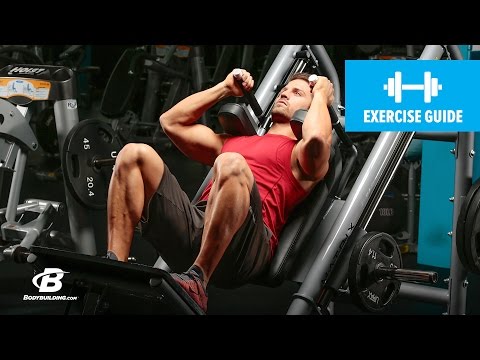
7. Hack Squat
When to Perform Hack Squats
Once you want to push your quads close to failure without holding anything or balancing a bar, the hack squat machine takes over. The fixed path removes the goblet squat’s grip and core demand entirely, so you can chase pure leg fatigue with drop sets and higher reps than you’d ever manage holding a dumbbell. I usually save it for the end of leg day, in the 10 to 15 rep range, after the free-weight work is done.
How to Perform Hack Squats
- Set your back and shoulders against the pads and place your feet about shoulder width on the platform.
- Disengage the safety handles and let your knees bend to lower the sled under control.
- Descend until your thighs reach at least parallel.
- Drive through your whole foot to push the sled back up, stopping just short of locking your knees.
Equipment: hack squat machine.
This video from Bodybuilding.com shows how to perform the hack squat.
Tips for Hack Squats
- Place your feet lower on the platform to hit the quads harder, or higher to bring the glutes and hamstrings in more.
- This is a good spot to finish leg day with a drop set or two, since there’s no balance component to manage.
- Keep your lower back flat against the pad instead of letting it round at the bottom.
- Don’t chase depth past what your lower back can hold flat. A shorter range with good position beats a deeper one with a rounded back.
Need a swap for this one too? See our hack squat alternatives. Or see exactly how it compares to the barbell version in our back squats vs hack squats breakdown.
8. Leg Press
When to Perform the Leg Press
The leg press is the alternative for moving the most weight with the least technical demand. You’re seated and fully supported, so none of the balance or core-bracing work a goblet squat requires applies here. It’s a strong way to keep adding load to your quads and glutes long after a single dumbbell or kettlebell has topped out, and it works as a standalone leg exercise or as extra volume after a heavier squat variation.
How to Perform the Leg Press
- Sit in the machine with your back flat against the pad and your feet about shoulder width on the platform.
- Release the safeties and lower the platform by bending your knees toward your chest.
- Descend until your knees reach about 90 degrees, keeping your lower back on the pad.
- Press the platform back up through your whole foot, stopping short of locking your knees.
Equipment: leg press machine.
This video from the National Academy of Sports Medicine (NASM) shows how to perform the leg press.

Tips for the Leg Press
- Stop the descent before your hips start to curl off the seat. That’s what rounds your lower back.
- Don’t slam your knees into lockout at the top.
- A higher, wider foot placement shifts more work to the glutes and hamstrings, a lower placement to the quads.
- Load jumps fast on this machine. Add weight in smaller increments than you’d think you need.
Need a swap for this one too? See our leg press alternatives, or read our leg press vs squat comparison for a direct look at how the two stack up.
Reasons to Choose a Goblet Squat Alternative
There are a few good reasons to swap the goblet squat for one of the options above:
- You’ve outgrown a single dumbbell or kettlebell. The front squat, Zercher squat, and belt squat all let you load past what one implement can handle, and most gyms cap out around 100 to 150 pounds of dumbbell weight anyway.
- Your gym’s dumbbells or kettlebells don’t go heavy enough. Machines remove that ceiling entirely, and our roundup of the best gym machines for legs covers more options beyond the hack squat and leg press.
- Ankle mobility limits your depth. The cyclist squat’s heel elevation fixes that without you needing to hold anything at all.
- One leg is lagging. Bulgarian split squats train each side on its own so the weak one catches up.
- You want more spinal-friendly volume. The belt squat and leg press load your legs hard with almost nothing on your back.
- You’re bored of the same movement. Rotating through 2 or 3 of these every few months keeps your training fresh without losing the quad-and-glute focus that made you pick a goblet squat in the first place.
Muscles Worked by the Goblet Squat
The goblet squat and its alternatives are lower-body exercises that train multiple muscles at once:
- Quadriceps: the primary mover, responsible for straightening your knees out of the bottom.
- Gluteus maximus: drives hip extension as you stand the weight up.
- Hamstrings: assist hip extension and help stabilize the knee.
- Adductors: the inner thigh muscles, working harder the deeper you squat.
- Core and upper back: brace hard to keep your torso upright against a weight held out in front of you, more so than a back squat.
- Forearms and grip: holding a dumbbell or kettlebell at your chest for reps builds real grip endurance on its own.
That anterior loading is really what separates the goblet squat from a back squat, and it’s why some of the alternatives above, the front squat and Zercher squat especially, train your upper back and core almost as hard as they train your legs.
For more on the broader muscles trained by squatting patterns in general, see our breakdown of the muscles worked by the squat.
FAQs
Can I build big legs without a goblet squat?
Yes. Your legs grow from loading the quads and glutes through a full range with enough volume, and they don’t care whether that load comes from a dumbbell, a barbell, or a machine. Every alternative on this list will build your legs if you train it hard and progress it over time, whether that means adding a rep, adding weight, or adding a set every week or two.
What’s the best goblet squat alternative for limited ankle mobility?
The cyclist squat. Elevating your heels lets your knees travel forward without your ankles needing to bend as much, so you can hit real depth even if a flat-footed goblet squat cuts you off early. The belt squat and leg press are also friendly options since you control the depth directly.
What’s the best goblet squat alternative at home?
The goblet squat itself is already one of the best home options there is, so if you have a dumbbell or kettlebell, keep using it. Once that gets too light, the Bulgarian split squat needs only a bench and a lighter pair of dumbbells to feel just as hard, since you’re only supporting your weight on one leg at a time.
Are goblet squat alternatives as good as the goblet squat itself?
For building muscle, yes, as long as you load them hard and take them close to failure. For teaching a brand-new lifter how to squat, the goblet squat is still hard to beat since holding the weight in front does most of the work of keeping your torso upright for you. Once that pattern is second nature, though, any of these 8 alternatives will keep your legs growing just as well.
How much weight should I use compared to my goblet squat?
It depends on the exercise, so don’t expect a straight conversion. A front squat or Zercher squat usually lets you handle more than your heaviest goblet squat once you’ve built up to it, since a barbell scales past what a dumbbell rack offers. A hack squat, leg press, or belt squat number will look much bigger than your goblet squat weight, because the machine or rig is doing part of the stabilizing work for you. Start conservative on any new movement for the first session or two and let the weight climb from there.
Do I need a spotter for any of these?
Not for most of them. The Bulgarian split squat, cyclist squat, belt squat, hack squat, and leg press are all safe to take close to failure on your own, since you can bail out or the machine catches the weight. The front squat and Zercher squat are the two where I’d want safety pins set at the right height in a rack, or a spotter if you’re going heavy, since dumping a barbell from the front isn’t as clean as stepping back from a back squat.
Key Takeaways
If you’ve simply outgrown what a dumbbell or kettlebell can load, the front squat is the closest full swap, and it’s worth learning as your next squat variation regardless. If you want to keep everything front loaded and beginner friendly while adding real weight, go with the Zercher squat or the landmine squat. If ankle mobility is holding your depth back, the cyclist squat fixes that in one session. Pick the alternative that fits your equipment and your joints, then progress it the same way you’d progress a goblet squat, add load or reps before you add complexity.
Other Alternative Exercises
If you enjoyed this post, check out our other roundups of the best alternatives for other exercises.