The seated leg curl is one of the best machines for hamstring size. You sit upright with your thighs pinned under a pad, and curl your heels down and back. Because your hips are bent, the hamstrings are stretched at the start of each rep, and that long position is why this machine works so well for growing them.
The problem is that not every gym has one, and the ones that do tend to have a line. Maybe you train at home, or the machine hurts your knees, or it’s the wrong size for your legs. Whatever the reason, a handful of exercises can give you most of the same hamstring work.
Here are the 8 alternatives I’d use, picked for how much hamstring work they give you, how easy they are to find equipment for, and how well they hold up without a machine. If you’re after the lying version of the machine, see our lying leg curl alternatives. This page is about the seated machine.
Table of Contents
- 1 The 8 Best Seated Leg Curl Alternatives
- 2 Reasons to Choose a Seated Leg Curl Alternative
- 3 Muscles Worked by the Seated Leg Curl
- 4 FAQs
- 4.1 What is the best alternative to the seated leg curl?
- 4.2 Can I replace the seated leg curl with Romanian deadlifts?
- 4.3 Is the seated leg curl better than the lying leg curl?
- 4.4 What can I do at home instead of a seated leg curl?
- 4.5 How many reps and sets should I do?
- 4.6 Are cable leg curls as good as the machine?
- 5 Key Takeaways
- 6 Other Alternative Exercises
- 6.1 The 8 Best Ab Rollout Alternatives
- 6.2 The 9 Best Barbell Row Alternatives
- 6.3 The 10 Best Lat Pulldown Alternatives
- 6.4 The 7 Best Deadlift Alternatives
- 6.5 The 9 Best Pendlay Row Alternatives
- 6.6 The 10 Best Lying Leg Curl Alternatives
- 6.7 The 9 Best T-Bar Row Alternatives
- 6.8 The 10 Best Hack Squat Alternatives
- 6.9 The 10 Best Glute Bridge Alternatives
- 6.10 The 10 Best Bulgarian Split Squat Alternatives
- 6.11 The 10 Best Leg Extension Alternatives
- 6.12 The 8 Best Incline Bench Press Alternatives
- 6.13 The 10 Best Box Jump Alternatives
- 6.14 The 10 Best Bent Over Row Alternatives
- 6.15 The 10 Best Romanian Deadlift Alternatives
The 8 Best Seated Leg Curl Alternatives
- Nordic Hamstring Curl
- Stability Ball Hamstring Curl
- Slider Hamstring Curl
- Standing Cable Leg Curl
- Seated Resistance Band Leg Curl
- Romanian Deadlift
- Glute-Ham Raise
- Dumbbell Lying Leg Curl
1. Nordic Hamstring Curl
When to Perform the Nordic Hamstring Curl
This is the hardest option on the list, and it’s the one I’d pick if you want something that beats the machine. You kneel, hold your body in a straight line from knee to head, and lower yourself toward the floor using only your hamstrings. The seated curl trains the hamstrings with the hips bent. The Nordic trains them with the hips straight, so you get a different stimulus and a tough eccentric on top of it.
Don’t expect to lower all the way down on day one. Most lifters can only control the first third of the range, and that’s fine. I’d put it at the start of a leg day, for 2 or 3 sets of 3 to 6 reps, because you need to be fresh to lower slowly. We also have a full guide on Nordic curl alternatives if you need easier versions.
How to Perform the Nordic Hamstring Curl
- Kneel on a pad with your ankles anchored under something heavy, a loaded barbell, a sturdy bench or a partner holding them down.
- Squeeze your glutes and keep a straight line from your knees to your head.
- Lower your torso toward the floor as slowly as you can, without bending at the hips.
- Catch yourself with your hands at the bottom, then push off the floor lightly and use your hamstrings to pull back up as far as you can.
Equipment: a pad, plus a partner or an anchor for your ankles.
This video from Peak Strength shows how to do the Nordic Hamstring Curl.

Tips for the Nordic Hamstring Curl
- Use a count of 3 to 5 seconds on the way down. Speed is what makes people fail this lift.
- Keep your hips extended. If they fold, the load drops off.
- If you can’t control the lowering, hold a band or a pole for help, or use a hands-on-a-box version and push off with your arms.
- Add reps before you add anything else, and build up slowly because hamstrings get sore from this one.
2. Stability Ball Hamstring Curl
When to Perform the Stability Ball Hamstring Curl
This is the swap for anyone who wants a curl and has no machine at all. You lie on your back with your heels on a ball, lift your hips, and roll the ball in toward your butt. The hips stay extended during the curl, which is the opposite of the seated machine, but it’s still a real hamstring curl with a decent stretch at the start.
I like it as a finisher or a home option. The ball makes you stay tight through your glutes and core or you’ll wobble, so it’s harder than it looks. I’d run it for 3 sets of 8 to 15 reps. If that gets easy, switch to one leg at a time.
How to Perform the Stability Ball Hamstring Curl
- Lie on your back with your arms by your sides and your heels on top of a stability ball.
- Press your heels into the ball and lift your hips so your body forms a straight line from shoulders to heels.
- Bend your knees and roll the ball toward your butt while you keep your hips high.
- Extend your legs back out slowly, keeping your hips up the whole time, and repeat.
Equipment: a stability ball.
This video from PureGym shows how to do the Stability Ball Hamstring Curl.

Tips for the Stability Ball Hamstring Curl
- Keep your hips up. If they drop, you’ve turned it into a leg roll and lost the hamstring work.
- Pull your toes toward your shins so the heels stay planted on the ball.
- A slightly deflated ball is easier to control for beginners.
- Go slow on the way out. That’s where most of the work happens.
3. Slider Hamstring Curl
When to Perform the Slider Hamstring Curl
The slider curl is almost the same lift as the stability ball curl, but it’s flatter and tougher to cheat. You lie on your back with your heels on gliding discs or towels on a smooth floor, lift your hips, and slide your heels in and out. Because the heels travel along the floor, the lever arm is longer, which makes the last part of each rep burn.
I’d choose it over the ball if you travel or train in a garage. A pair of furniture sliders or two small towels cost almost nothing. Use it for 3 sets of 8 to 12, and try single-leg reps once two legs feel easy.
How to Perform the Slider Hamstring Curl
- Lie on your back with your heels on sliders (or towels on a smooth floor) and your knees bent.
- Lift your hips so your body forms a straight line from your shoulders to your knees.
- Slide your heels away from you until your legs are almost straight, keeping your hips high.
- Pull your heels back in toward your butt and repeat.
Equipment: gliding discs, furniture sliders, or towels on a hard floor.
This video from Travis Tarrant shows how to do the Slider Hamstring Curl.

Tips for the Slider Hamstring Curl
- Use towels on a hard floor and sliders on carpet. Use whichever glides better on your floor.
- Keep your hips from sagging. Squeeze your glutes at the top of each rep.
- If the full range is too hard, shorten the slide and add depth over a few weeks.
- Control the lowering. A fast slide out ruins the exercise.
4. Standing Cable Leg Curl
When to Perform the Standing Cable Leg Curl
If your gym has a cable stack but no curl machine, this is the closest thing you’ll get. You stand facing the stack with an ankle cuff on a low pulley and curl one heel toward your butt. It’s a single-leg exercise, so you also fix any imbalance between your hamstrings, which a two-leg machine can hide.
To be straight about it, the hips are straight here, not bent like on the seated machine, so you lose a bit of the long-length stretch. I’d lean forward a little and hold a rack or the stack for balance, and keep the weight moderate. I use it for 3 sets of 10 to 15 reps per leg.
How to Perform the Standing Cable Leg Curl
- Attach an ankle cuff to a low pulley and clip it around one ankle.
- Stand facing the stack and hold onto a rack or the machine for balance.
- Curl your heel toward your butt, keeping your thigh still.
- Lower slowly until your leg is almost straight and repeat, then switch legs.
Equipment: a cable stack, an ankle cuff, and something to hold.
This video from OPEX Fitness shows how to do the Standing Cable Leg Curl.

Tips for the Standing Cable Leg Curl
- Keep the working knee slightly behind the standing leg so your thigh doesn’t swing.
- Don’t lean back to finish the rep. A small lean forward keeps tension on the hamstring.
- Use a lighter weight than you think. Balance is the limiting factor.
- Pause for a second at the top for a stronger squeeze.
5. Seated Resistance Band Leg Curl
When to Perform the Seated Resistance Band Leg Curl
This is the only option here that copies the seated machine’s body position. You sit on a bench or chair, anchor a band low in front of you, loop it around your ankles, and curl your heels back and under you. Your hips are bent just like on the machine, so the hamstrings are stretched at the start, which is the reason most people like the seated leg curl in the first place.
Bands get harder as they stretch, so the top of the rep is the toughest part, the opposite of a machine. I use this at home and when I travel. Three to four sets of 12 to 20 reps works well, and you can double up bands when one gets easy.
How to Perform the Seated Resistance Band Leg Curl
- Anchor a band to something solid at floor level and sit facing it on a bench or sturdy chair.
- Loop the band around both ankles (or one at a time) with some tension at the start.
- Curl your heels back and down toward the underside of the chair.
- Return slowly until your legs are straight and the band is almost slack, then repeat.
Equipment: a resistance band, a solid anchor, and a bench or chair.
This video from Scott Abel Coaching shows how to do the Seated Resistance Band Leg Curl.

Tips for the Seated Resistance Band Leg Curl
- Sit tall and hold the seat so your hips don’t slide forward.
- Pick a band that makes you struggle by rep 12, since the load is lower than a machine stack.
- Take 2 seconds up and 3 seconds down to get more from a light band.
- Anchor the band lower than your ankles so the pull comes from slightly underneath.
6. Romanian Deadlift
When to Perform the Romanian Deadlift
The RDL gets the same hip-flexed hamstring stretch the seated curl does, and you can load it much heavier. It’s not a curl, since the knees barely bend, but the hamstrings are lengthened under load at the bottom of every rep, and that’s what the seated machine is known for.
I’d use it as the main hamstring lift and not as a perfect swap. Run it for 3 or 4 sets of 6 to 10 reps. Because it also hits your glutes and lower back, I’d place it early in the session. We have a whole list of Romanian deadlift alternatives if you want to change it up.
How to Perform the Romanian Deadlift
- Hold a barbell or a pair of dumbbells at your thighs, with your feet about hip width apart and your knees slightly bent.
- Push your hips back and let the weight slide down your thighs, keeping your back flat.
- Lower until you feel a strong stretch in the back of your legs, usually around mid-shin.
- Drive your hips forward to stand up, squeezing your glutes at the top.
Equipment: a barbell or a pair of dumbbells.
This video from NASM shows how to do the Romanian Deadlift.

Tips for the Romanian Deadlift
- Keep the weight close to your legs the whole way down.
- Stop when your back starts to round. How far you go depends on your hamstring length, not on reaching the floor.
- Keep your knees at about the same angle through the rep. If they keep bending, it’s turning into a deadlift.
- Use straps if your grip gives out before your hamstrings do.
7. Glute-Ham Raise
When to Perform the Glute-Ham Raise
The glute-ham raise is the machine version of the Nordic. You lock your feet into a footplate, put the pad at your thighs, and lower your body forward, then curl back up using your hamstrings and glutes. It works the knee flexion and hip extension jobs together, so it’s a big upgrade over a seated curl in terms of strength carryover.
If your gym has a GHD or a glute-ham bench, it’s much kinder than the Nordic because the pad supports your thighs and you can adjust the angle. I’d run 3 sets of 6 to 12 reps. Beginners can cross their arms at the chest and use a shorter range. Our guide to glute-ham raise alternatives covers the swaps if your gym doesn’t have one.
How to Perform the Glute-Ham Raise
- Adjust the footplate and pad so your knees sit just behind the pad and your ankles are locked in.
- Start with your body upright and your arms crossed over your chest.
- Lower your torso slowly toward the floor by extending your knees, keeping your body in a straight line.
- Pull yourself back up by bending your knees and squeezing your glutes and hamstrings, then repeat.
Equipment: a glute-ham developer (GHD) or a glute-ham raise bench.
This video from Live Lean TV shows how to do the Glute-Ham Raise.

Tips for the Glute-Ham Raise
- Start with bodyweight only. Even that is hard at first.
- Keep your hips locked and your spine neutral. Don’t fold at the waist.
- Use a band for assistance, or a push off the floor, to finish tough reps.
- Add a plate to your chest only after 12 clean bodyweight reps.
8. Dumbbell Lying Leg Curl
When to Perform the Dumbbell Lying Leg Curl
This one is the cheapest hamstring curl you can do. You lie face down on a bench, pinch a dumbbell between your feet, and curl it toward your butt. The hips are straight like on the lying machine, so it doesn’t match the seated version, but it works for lifters at home who only own dumbbells.
The weak spot is load. A dumbbell tops out fast and it can slip. I’d use it for higher reps, around 12 to 20 per set, and slow the lowering way down. If you want to see what the lying machine can do for you, check our lying leg curl alternatives.
How to Perform the Dumbbell Lying Leg Curl
- Lie face down on a flat bench with your knees just off the edge.
- Squeeze a dumbbell between your feet, holding it by the plate with your toes pointed up.
- Curl your heels toward your butt without lifting your hips off the bench.
- Lower slowly until your legs are almost straight and repeat.
Equipment: a flat bench and a dumbbell.
This video from LIVESTRONG shows how to do the Dumbbell Lying Leg Curl.
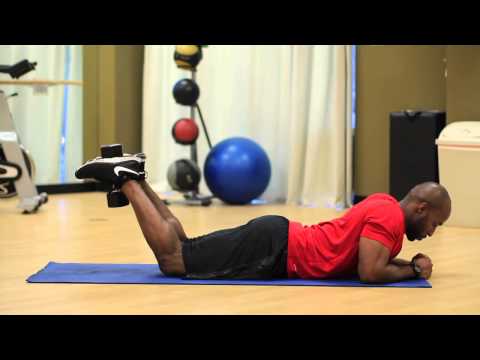
Tips for the Dumbbell Lying Leg Curl
- Have a friend hand you the dumbbell, or sit up and place it between your feet before lying down.
- Keep your toes pulled up so the dumbbell doesn’t slide.
- Use a light weight and a 3 second lowering. Don’t swing it.
- A decline bench makes the start of the rep a bit easier on your hamstrings.
Reasons to Choose a Seated Leg Curl Alternative
None of these are a downgrade for every lifter. Each one keeps part of what the machine does, and a few of them fix problems the machine creates.
- The machine is taken or missing. The cable curl and the RDL work in nearly any commercial gym, and the band curl works in a hotel room.
- You train at home. A band, a ball, or a pair of sliders is all you need for the stability ball curl, slider curl and band curl.
- The pad bothers your knees or thighs. The seat and the thigh pad can pinch if your legs are long or short. The floor-based curls and the RDL skip the pad entirely.
- You want to fix a weak side. The standing cable curl and single-leg versions of the ball and slider curls stop your stronger leg from taking over.
- You want more strength carryover. The Nordic, the glute-ham raise and the RDL train the hamstrings the way they work when you squat, pull and run.
Muscles Worked by the Seated Leg Curl
The seated leg curl is a knee flexion exercise, so the hamstrings do almost all of the work. The alternatives above hit the same muscles, with a bit of help from the glutes and calves depending on the hip position.
- Hamstrings: the biceps femoris, semitendinosus and semimembranosus. They bend your knee and, in the RDL and glute-ham raise, extend your hip.
- Gastrocnemius (calves): crosses the back of the knee and helps with every curl. It works hardest on the cable and band curls.
- Glutes: hold your hips up on the ball, slider and Nordic curls, and drive the RDL and glute-ham raise.
- Core and lower back: keep your body in a straight line on the Nordic, ball and slider curls. For direct quad work to balance the hamstrings, see our leg extension alternatives.
FAQs
What is the best alternative to the seated leg curl?
The Nordic hamstring curl if you want the strongest option, and the seated band curl if you want the closest body position. For most lifters at a normal gym, the RDL is the easiest to load and pairs well with any of the curls.
Can I replace the seated leg curl with Romanian deadlifts?
Partly. The RDL stretches the hamstrings with the hips bent, which is the main thing the seated curl does, but it doesn’t train knee flexion. If you can, do both in the same week. See our Romanian deadlift alternatives if you need ways to change that lift.
Is the seated leg curl better than the lying leg curl?
Most research and most lifters favor the seated version for hamstring growth, since the long position loads the muscle where it’s stretched. The lying version is still a good exercise and easier to find. We cover that machine in the lying leg curl alternatives guide.
What can I do at home instead of a seated leg curl?
A band curl while seated is the closest. Slider curls, stability ball curls and dumbbell lying curls also work with very little gear. Add Nordics if you have something to anchor your ankles.
How many reps and sets should I do?
Two to four hard sets of 8 to 15 reps, two times per week. Go close to failure on the curls and keep the lowering slow. The Nordic and glute-ham raise are lower reps because they’re harder.
Are cable leg curls as good as the machine?
They’re close. You lose the hip-flexed stretch because you’re standing, but you can train one leg at a time and the resistance is smooth. I’d treat it as a solid substitute and not a perfect copy.
Key Takeaways
For the closest swap, use the seated band curl. For the most strength, use the Nordic or the glute-ham raise. If you only have a gym with barbells and dumbbells, use the RDL and a lying dumbbell curl. You only need one or two of these, so pick what fits your equipment and add a rep or a little weight from week to week.
Other Alternative Exercises
If you enjoyed this post, check out our other roundups of the best alternatives for other exercises.