The bicep curl is the standard arm exercise for a reason. It trains the biceps brachii, the muscle on the front of your upper arm, plus the brachialis underneath it and the forearm muscles that help hold the weight. Most of us start with a dumbbell or barbell curl and never think much about it.
But you might need a different option. Maybe your elbows or wrists complain about the straight bar, you only have bands at home, or your arms stopped growing from the same curl you’ve done for two years. A different curl or pull can fix all three.
Here are the 8 alternatives I’d actually use. I picked them for how well they load the biceps, how kind they are to your joints, and what equipment they need. Some of these are straight swaps, and some change the angle on purpose. Keep reading to find the one that fits your situation.
Table of Contents
- 1 The 8 Best Bicep Curl Alternatives
- 2 Reasons to Choose a Bicep Curl Alternative
- 3 Muscles Worked by Bicep Curls
- 4 FAQs
- 4.1 What is the best alternative to the bicep curl?
- 4.2 Can I build big biceps without curls?
- 4.3 How many reps should I do for biceps?
- 4.4 Which curl is best for the long head of the biceps?
- 4.5 Should I do curls before or after back training?
- 4.6 Are curls enough to train the biceps?
- 4.7 Why do curls hurt my elbow?
- 5 Key Takeaways
- 6 Other Alternative Exercises
- 6.1 The 9 Best Barbell Row Alternatives
- 6.2 The 9 Best Pendlay Row Alternatives
- 6.3 The 10 Best Romanian Deadlift Alternatives
- 6.4 The 10 Best Glute Bridge Alternatives
- 6.5 The 12 Best Pull-Up Alternatives
- 6.6 The 10 Best Dumbbell Pullover Alternatives
- 6.7 The 10 Best Bulgarian Split Squat Alternatives
- 6.8 The 10 Best Bench Press Alternatives
- 6.9 The 10 Best Overhead Press Alternatives
- 6.10 The 9 Best Lunge Alternatives
- 6.11 The 10 Best Leg Extension Alternatives
- 6.12 The 10 Best Plank Alternatives
- 6.13 The 10 Best Front Squat Alternatives
- 6.14 The 10 Best Bent Over Row Alternatives
- 6.15 The 10 Best Lat Pulldown Alternatives
The 8 Best Bicep Curl Alternatives
- Incline Dumbbell Curl
- Cable Curl
- Chin-Up
- Resistance Band Curl
- Bayesian Cable Curl
- EZ-Bar Curl
- Machine Preacher Curl
- Hammer Curl
1. Incline Dumbbell Curl
When to Perform Incline Dumbbell Curls
This is my first pick when someone wants a new stimulus without leaving dumbbells behind. Lying back on an incline bench puts your arms behind your torso, so the long head of the biceps starts the rep stretched. A standing curl barely loads that position.
It’s also easier on the wrists than a barbell. Each hand finds its own path, and the bench takes away any urge to swing. Plan on lighter weights than you use standing. Your ego will complain for a week, then you’ll get over it.
Where does it fit? Early in an arm day, right after any heavy pulling. I like 3 sets of 8 to 12 with a slow lowering phase. Because the stretch is so demanding, a little soreness in the front of the shoulder is normal the first couple of weeks. If it’s sharp, raise the bench angle.
How to Perform Incline Dumbbell Curls
Equipment: Dumbbells and an adjustable bench.
- Adjust an adjustable bench to about 45 to 60 degrees and sit back with your head, shoulders, and glutes against the pad.
- Let the dumbbells hang straight down at your sides with your palms facing forward.
- Curl one or both dumbbells up without moving your upper arms forward.
- Squeeze at the top, then lower all the way to a full stretch.
- Repeat for 8 to 12 reps per arm.
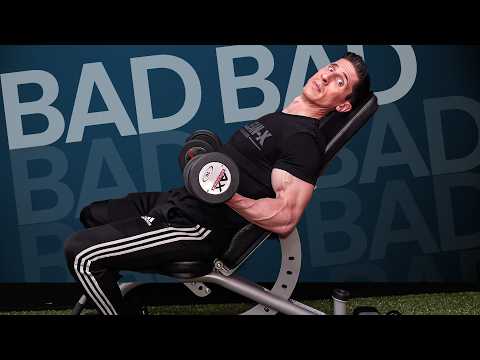
This video from ATHLEAN-X shows how to perform the incline dumbbell curl.
Tips for Incline Dumbbell Curls
- Keep your elbows pointed at the floor. If they drift forward, the stretch is gone.
- A steeper bench (closer to 60 degrees) is easier on the shoulder. A flatter one adds stretch.
- Take 2 to 3 seconds to lower. The bottom is the whole point of this lift.
2. Cable Curl
When to Perform Cable Curls
A cable keeps the biceps under load from the first inch to the last, including the bottom of the rep, where a dumbbell goes almost slack. That makes it a solid swap if free weights beat up your elbows. The smooth resistance is kinder to the joint.
I like a straight bar or an EZ attachment on a low pulley for heavier work, and a rope or single handle for higher reps. If cables are your main plan, our cable curl alternatives page goes deeper on the options.
As for placement, this works well as your main curl or as a finisher after something heavier. Two to four sets of 10 to 15 is a good range. The stack makes small jumps easy, so you can add 5 pounds or less and keep progressing for a long time.
How to Perform Cable Curls
Equipment: A cable station with a low pulley and a bar or handle.
- Attach a straight or EZ bar to a low pulley.
- Stand a step or two back from the stack with your feet shoulder-width apart.
- Grab the bar with an underhand grip and pin your elbows to your sides.
- Curl the bar to shoulder height, squeeze, and lower under control.
- Stop each rep just short of letting the plates touch down.
This video from Colossus Fitness shows how to perform the cable curl.

Tips for Cable Curls
- Step back far enough that the cable never rests on the stack between reps.
- Don’t lean back to finish the rep. If you need to, the weight is too heavy.
- Pause for a beat at the top, where cables are strongest.
3. Chin-Up
When to Perform Chin-Ups
The chin-up is the best curl alternative if you want to train the biceps and your back with one lift. The underhand grip hands much of the work to the biceps, and your bodyweight is a load most lifters can’t match with a dumbbell curl. I use these when I want heavy, low-skill arm work.
It isn’t a perfect swap. The lats do a big share of the pulling, so it won’t isolate the biceps like a curl does. If your elbows hurt from curling, though, chins are often fine because the joint angle and loading are different.
Put chins first in your workout while you’re fresh, and treat them like a main lift. Three sets of 5 to 8 is plenty. Once you can do 3 sets of 10, hang a dumbbell from a belt instead of chasing more reps.
How to Perform Chin-Ups
Equipment: A pull-up bar. See our pull-up alternatives if you don’t have one.
- Grab a pull-up bar with an underhand grip, hands about shoulder-width apart.
- Hang with your arms fully extended and your shoulders pulled slightly down.
- Pull your chest toward the bar until your chin clears it.
- Lower slowly until your arms are straight again.
- Aim for 5 to 10 reps, or add weight once you reach 10 clean ones.
This video from MuscleHack shows how to perform the chin-up.

Tips for Chin-Ups
- Start every rep from a dead hang. Half reps shortchange the stretch.
- Cross your ankles and keep your legs still. No kipping.
- Can’t do one yet? Lower yourself slowly from the top for 3 to 5 seconds, or use a band for help.
4. Resistance Band Curl
When to Perform Resistance Band Curls
Bands are the answer when you’re training at home or traveling. A band gets harder as you curl up, so the top of the rep, where the biceps are most shortened, takes the most effort. That’s the opposite of how a dumbbell feels.
I wouldn’t build a whole arm program on bands, but they’re fine for high-rep work, warm-ups, and finishers. They’re also easy on the elbows and wrists because the load at the bottom is light.
Keep expectations realistic. Bands won’t replace a heavy curl for strength, but 3 sets of 15 to 20 taken close to failure will still grow the biceps. They also pack into a bag, which is the reason they earned a spot on this list.
How to Perform Resistance Band Curls
Equipment: A loop or tube resistance band.
- Stand on the middle of a resistance band with your feet shoulder-width apart.
- Hold an end of the band in each hand with your palms facing forward.
- Keep your elbows against your sides and curl your hands up to your shoulders.
- Hold for a second at the top.
- Lower slowly. Fight the band on the way down.
This video from Get Exercise Confident shows how to perform the resistance band curl.

Tips for Resistance Band Curls
- Choose a band that lets you hit 12 to 20 reps. Light bands fail fast.
- Stand on more of the band, or on a shorter section, to add resistance.
- Keep your elbows pinned so the hard part at the top stays hard.
5. Bayesian Cable Curl
When to Perform Bayesian Cable Curls
This is the curl I’d add if you have a cable machine and want to try something new. You face away from the stack, so your arm starts behind your body. That lengthens the long head of the biceps under load, which a standard curl can’t do.
It looks odd the first time. After a couple of sessions it becomes one of the best pumps in the gym. Use light weight at first and treat the first workout as practice.
One more thing. Because the long head is under heavy stretch, you’ll feel this the next day more than most curls. Start with 2 sets and add a third once the soreness fades. I’d rather you ease in than skip a week of arms.
How to Perform Bayesian Cable Curls
Equipment: A cable station with a single handle.
- Attach a single handle to a low pulley and grab it with your right hand.
- Turn so you’re facing away from the machine and take a step forward until you feel tension.
- Let your arm hang slightly behind your torso with your palm facing up.
- Curl the handle up toward your shoulder while keeping your upper arm in place.
- Lower slowly, then repeat for 10 to 15 reps before switching arms.
This video from Live Lean TV shows how to perform the Bayesian cable curl.

Tips for Bayesian Cable Curls
- Keep your upper arm slightly behind your body the whole time. That’s where the extra stretch comes from.
- Take it easy at the bottom. Don’t bounce out of the stretch.
- Use a staggered stance and brace your free hand on your hip for balance.
6. EZ-Bar Curl
When to Perform EZ-Bar Curls
If the problem is your wrists, this is the simplest fix. The bend in an EZ bar lets your forearms sit at an angle instead of a fully flat underhand position. Many lifters with wrist or elbow pain find that small change makes curling comfortable again.
It’s a barbell curl in everything but the grip, so it’s easy to load and easy to progress. It’s the one I’d pick if you only own a bar and some plates.
You get the same loading as a straight bar with less strain at the wrist. Most people can curl a bit more on an EZ bar too, which is nice for progression. Three sets of 8 to 12 works for almost everyone.
How to Perform EZ-Bar Curls
Equipment: An EZ bar and plates.
- Pick up an EZ bar with an underhand grip on the inside angled bends.
- Stand tall with your feet shoulder-width apart and your arms extended.
- Keep your elbows at your sides and curl the bar toward your chest.
- Squeeze at the top without leaning back.
- Lower the bar all the way down under control.
This video from MFIT SUPPS shows how to perform the EZ-bar curl.

Tips for EZ-Bar Curls
- Try the wider outer grip too. Close grips work the outer biceps more, while wide grips lean on the inner head.
- Keep your glutes against a wall if you tend to rock.
- Stay in the 8 to 12 rep range for steady progress.
7. Machine Preacher Curl
When to Perform Machine Preacher Curls
When your form falls apart late in a curl set, the machine fixes it. The pad locks your upper arms in place so there’s no way to swing or cheat. All the work goes to the biceps, which makes this a great option for the last few hard sets of a workout.
It also loads the lower half of the rep in a way standing curls don’t. For more options in this style, check our preacher curl alternatives.
Gyms vary a lot in how these machines fit. If the pad feels too high or too low for your arm length, try a different seat height before giving up on it. A good fit makes the whole lift feel better.
How to Perform Machine Preacher Curls
Equipment: A preacher curl machine.
- Adjust the seat so your armpits rest on the top of the pad.
- Grab the handles with an underhand grip.
- Curl the handles up toward your shoulders.
- Pause for a moment at the top.
- Lower to just short of lockout and repeat.
This video from Marcus Savard shows how to perform the machine preacher curl.

Tips for Machine Preacher Curls
- Stop just short of full lockout if your elbows are cranky. Locking out hard at the bottom stresses the tendon.
- This lift is perfect for drop sets and going close to failure.
- Keep your hands relaxed and drive with your elbows, not your forearms.
8. Hammer Curl
When to Perform Hammer Curls
The neutral grip changes who does the work. You still train the biceps, but the brachialis and brachioradialis pick up more of it, and those are the muscles that add thickness to your arm. Most lifters feel hammers on the top of the forearm.
It’s also the grip that feels best on sore elbows and wrists. Our hammer curl alternatives page covers variations like rope and cross-body versions.
Hammers also let you go heavier than a regular curl for most people. Three sets of 8 to 12 after your main curl is how I usually run them. If your forearms are a weak point, they’re a good fix.
How to Perform Hammer Curls
Equipment: Dumbbells.
- Stand with a dumbbell in each hand and your palms facing your thighs.
- Keep your elbows at your sides and your wrists straight.
- Curl the dumbbells up without rotating your palms.
- Squeeze at the top.
- Lower with control and repeat.
This video from National Academy of Sports Medicine (NASM) shows how to perform the hammer curl.

Tips for Hammer Curls
- Keep your thumbs on top like you’re holding a hammer.
- Alternate arms if you want to use heavier weights without losing form.
- Add them after an underhand curl, not instead of one, if you want a complete arm.
Reasons to Choose a Bicep Curl Alternative
There are a few good reasons to swap the standard curl for something else:
- Your elbows or wrists hurt. The EZ-bar curl and hammer curl change the wrist angle, and the cable curl smooths out the resistance.
- You’re training at home. Bands and a pull-up bar cover almost everything on this list.
- You want a new stimulus. The incline dumbbell curl and Bayesian cable curl train the biceps in a stretched position that a standing curl misses.
- You want to push hard safely. The machine preacher curl lets you train to failure without a spotter.
- You’re short on time. Chin-ups train your back and biceps together.
Curls also come in more flavors than I covered above. If you want to isolate one arm at a time, the concentration curl alternatives and spider curl alternatives pages have more ideas.
Muscles Worked by Bicep Curls
The curl and its alternatives train the front of the arm, with some help from the forearm and back depending on the lift:
- Biceps brachii: the primary mover, with a long head and a short head. Stretched curls like the incline and Bayesian version emphasize the long head.
- Brachialis: sits under the biceps and adds thickness. Hammer curls hit it hardest.
- Brachioradialis: the forearm muscle that helps with neutral and overhand grips.
- Lats and rear delts: work during chin-ups, but not during curls.
- Forearm flexors: hold the weight and work harder with heavier loads.
FAQs
What is the best alternative to the bicep curl?
For most people, the incline dumbbell curl. It’s still a dumbbell curl, but the stretch at the bottom makes it more effective. If you’re dealing with elbow pain, start with the EZ-bar curl or hammer curl instead.
Can I build big biceps without curls?
Yes. Chin-ups and rows train the biceps hard, and plenty of lifters build good arms from pulling alone. Adding a curl variation on top gets you there faster, so I wouldn’t skip direct arm work completely.
How many reps should I do for biceps?
Most curl variations work well in the 8 to 15 rep range. Bands and cables do well on the higher end, around 12 to 20. Chin-ups are best at 5 to 10.
Which curl is best for the long head of the biceps?
The incline dumbbell curl and Bayesian cable curl. Both position your arm behind your torso, which loads the long head while it’s stretched.
Should I do curls before or after back training?
After. Your biceps already work during rows and chin-ups, so training them first leaves you weaker on the lifts that build your back. Put your curl or its alternative at the end of a pull day, or on an arm day of its own.
Are curls enough to train the biceps?
They can be, but I’d mix two or three styles over a training block. Pair a stretched curl like the incline or Bayesian version with a neutral-grip hammer curl, and you cover the long head, the short head, and the brachialis.
Why do curls hurt my elbow?
Usually it’s too much weight, a straight bar that forces your wrists flat, or too many sets of the same curl. Switching to an EZ bar, hammer grip, or cable often helps. If the pain sticks around, see a doctor or physical therapist.
Key Takeaways
If you want my pick, I’d start with the incline dumbbell curl for muscle growth and the EZ-bar curl if your wrists are bothering you. Training at home, use a band and a pull-up bar. Pick one or two from this list, run them for 6 to 8 weeks, and see how your arms respond.
Other Alternative Exercises
If you enjoyed this post, check out our other roundups of the best alternatives for other exercises.