The Russian twist is a seated rotational exercise for your obliques. You sit on the floor with your knees bent, lean your torso back to about 45 degrees, and rotate side to side while holding a plate, dumbbell, or medicine ball, tapping it to the floor beside your hip on each side. That rotation under a leaned-back, flexed spine is what makes it such a direct oblique builder, and it’s why so many ab circuits close with 3 sets of 15 to 20 reps per side.
You might want a swap for a few reasons. The seated, rounded-back position loads your lumbar spine while it’s flexed and rotating at the same time, and that combination is exactly what physical therapists commonly tell people with a sensitive low back to avoid. Not everyone has a plate or medicine ball handy, and if you train at a commercial gym during a busy hour, floor space for a seated twist can be hard to find. Or maybe you’ve been doing Russian twists for months and your obliques have stopped responding, so you want a standing, loaded, or anti-rotation option to change the stimulus.
Here are the 8 Russian twist alternatives I reach for most, picked for how well they train the obliques through rotation or resist rotation, how easy they are on the low back, and what equipment they need. Some of these are standing, loaded options that let you add real resistance, and others are bodyweight exercises you can do on any floor with no gear at all. I’ll tell you when to use each one and exactly how to do it.
Table of Contents
- 1 The 8 Best Russian Twist Alternatives
- 2 Reasons to Choose a Russian Twist Alternative
- 3 Muscles Worked by the Russian Twist
- 4 FAQs
- 4.1 What’s the closest alternative to a Russian twist?
- 4.2 Can I build obliques without Russian twists?
- 4.3 What’s the best Russian twist alternative for a bad back?
- 4.4 What’s the best Russian twist alternative at home?
- 4.5 Why do Russian twists hurt my lower back?
- 4.6 How many rotational core exercises should I do per workout?
- 5 Key Takeaways
- 6 Other Alternative Exercises
- 6.1 The 10 Best Leg Extension Alternatives
- 6.2 The 10 Best Lat Pulldown Alternatives
- 6.3 The 10 Best Overhead Press Alternatives
- 6.4 The 10 Best Box Jump Alternatives
- 6.5 The 10 Best Plank Alternatives
- 6.6 The 10 Best Dumbbell Pullover Alternatives
- 6.7 The 10 Best Lying Leg Curl Alternatives
- 6.8 The 8 Best Tricep Dip Alternatives
- 6.9 The 10 Best Glute Bridge Alternatives
- 6.10 The 9 Best Lunge Alternatives
- 6.11 The 10 Best Romanian Deadlift Alternatives
- 6.12 The 10 Best Hack Squat Alternatives
- 6.13 The 9 Best Leg Press Alternatives
- 6.14 The 9 Best T-Bar Row Alternatives
- 6.15 The 9 Best Seated Cable Row Alternatives (2026)
The 8 Best Russian Twist Alternatives
- Cable Woodchopper
- Pallof Press
- Bicycle Crunch
- Side Plank
- Hanging Oblique Knee Raise
- Landmine Rotation
- Plank with Hip Rotation
- Side Bend
1. Cable Woodchopper
When to Perform the Cable Woodchopper
This is the closest standing swap I’ve got for a Russian twist. You’re still rotating your torso against resistance, but you’re upright instead of seated with your spine flexed, so it’s a lot friendlier on your low back. Use it when a Russian twist bothers your back, when you want to add real, adjustable load to the movement, or when you just want a version you can do standing at a cable stack. I usually program it for 3 sets of 10 to 12 reps per side, either high-to-low or low-to-high depending on which angle I’m targeting that day.
How to Perform the Cable Woodchopper
- Set a cable pulley high (for a high-to-low chop) or low (for a low-to-high chop), and stand sideways to the machine with your feet shoulder-width apart.
- Grab the handle with both hands and rotate your torso and arms toward the pulley to start.
- Pull the handle across your body in a diagonal line, rotating through your torso and hips as your arms travel down (or up) and across.
- Reverse the motion under control back to the starting position, then finish all reps on one side before switching.
Equipment: cable machine with an adjustable pulley and a single handle attachment.
This video from Live Lean TV Daily Exercises shows how to perform the standing cable woodchopper.

Tips for the Cable Woodchopper
- Rotate through your whole torso and hips. Your arms should just be along for the ride.
- Keep a slight bend in your knees so your hips can turn with your shoulders instead of staying locked forward.
- Go lighter than you think at first. The diagonal cable path exposes a weak core faster than most straight-line exercises.
- Pause for a beat at the end of each rep before reversing, instead of letting the weight stack yank you back.
For more cable-only ab options, see our cable abs exercises roundup.
2. Pallof Press
When to Perform the Pallof Press
This one flips the Russian twist on its head. Instead of rotating, you’re resisting rotation, which trains your obliques to stabilize your spine under a sideways pull. Use it if your low back is the reason you’re avoiding Russian twists in the first place, or if you want a core exercise that carries over directly to squats and deadlifts, where your obliques are working to keep you from twisting under the bar. I’ll run this for 3 sets of 10 to 15 reps per side, holding each press out for a full second before bringing it back in.
How to Perform the Pallof Press
- Set a cable pulley or anchor a resistance band at chest height, and stand sideways to it a few feet away.
- Grab the handle with both hands and hold it at your chest, so the resistance is pulling you sideways toward the anchor.
- Press the handle straight out in front of your chest, resisting the pull that wants to rotate your torso toward the machine.
- Hold the extended position for a second, then bring the handle back to your chest under control.
Equipment: cable machine or a resistance band anchored at chest height.
This video from Men’s Health shows how to perform the standing cable Pallof press.

Tips for the Pallof Press
- Keep your hips and shoulders square to the front the entire set. Any rotation toward the anchor means the weight is too heavy.
- Brace your core before you press out, the same way you’d brace for a heavy squat.
- Move to a wider stance or a half-kneeling position if you want to make it harder without adding weight.
- Do this one slowly. There’s no benefit to rushing a press-and-hold exercise.
Want more anti-rotation options built off this same movement? See our Pallof press alternatives guide.
3. Bicycle Crunch
When to Perform Bicycle Crunches
This is your no-equipment option, the one you can do on a hotel room floor or in your living room with zero setup. It rotates your torso the same way a Russian twist does, just lying down instead of seated with your spine loaded. I like it for higher-rep finishers, since it’s light enough to run for 15 to 20 reps per side without needing any added weight.
How to Perform Bicycle Crunches
- Lie on your back with your hands lightly cupped behind your head and your knees bent to about 90 degrees.
- Lift your shoulder blades off the floor and bring one knee toward your chest while extending the other leg straight out.
- Rotate your torso so the opposite elbow reaches toward the bent knee, without pulling on your neck.
- Switch sides in a smooth, continuous pedaling motion, alternating knee and elbow with each rep.
Equipment: none.
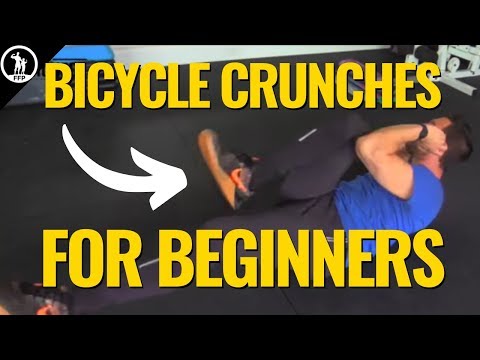
This video from Fit Father Project shows how to perform bicycle crunches with proper form for beginners.
Tips for Bicycle Crunches
- Keep your hands as a light cradle for your head, not a pulley you yank on to sit up.
- Slow the tempo down once the standard speed gets easy, instead of just cranking out faster reps.
- Extend the straight leg all the way out rather than keeping it bent, since that’s what keeps tension on your lower abs too.
- Exhale hard on each rotation to get a real contraction out of your obliques.
4. Side Plank
When to Perform the Side Plank
Use this when you want an isometric option instead of a moving one. Your obliques work hard here to keep your hips from sagging toward the floor, and there’s no rotation or spinal loading involved at all, which makes it one of the friendliest options on this list for a cranky low back. It’s also a good starting point if seated or standing rotational exercises feel unstable for you right now. Hold for 20 to 45 seconds per side, and add a second or third set once the first feels easy.
How to Perform the Side Plank
- Lie on your side with your elbow directly under your shoulder and your legs stacked.
- Lift your hips off the floor so your body forms a straight line from your ankles to your shoulders.
- Hold the position, keeping your hips square and your top hand resting on your hip or reaching toward the ceiling.
- Lower back down under control once the hold is finished, then repeat on the other side.
Equipment: none, though a mat helps if you’re on a hard floor.
This video from Howcast shows how to perform a proper side plank.

Tips for the Side Plank
- Stack your hips directly over each other. Letting the top hip roll forward takes tension off your obliques.
- Keep your neck in line with your spine instead of dropping your head toward the floor.
- Drop to your knees if a full side plank is too hard at first, then build back up to a straight-leg version.
- Add a top-leg raise once holding still gets easy, lifting your top leg a few inches for the last 10 seconds of each hold.
For a deeper breakdown of the isometric hold itself, see our guide to side planks.
5. Hanging Oblique Knee Raise
When to Perform Hanging Oblique Knee Raises
This is the most advanced exercise on the list, and it’s the one I’d pick if you want visibly defined obliques and already have solid grip strength from pull-ups or hangs. Raising your knees to one side under your own bodyweight, hanging from a bar, trains the same rotational pattern as a Russian twist but with a much longer lever and no seated spinal load. Stick to 8 to 12 reps per side, and don’t add extra weight until your form is clean for a couple sets in a row.
How to Perform Hanging Oblique Knee Raises
- Hang from a pull-up bar with an overhand grip, arms fully extended and legs straight down.
- Brace your core and bend your knees, drawing them up and toward one side of your body.
- Raise until your knees are roughly level with your hip, keeping the motion controlled rather than swinging.
- Lower back to a dead hang under control, then repeat toward the other side.
Equipment: pull-up bar (lifting straps or a hanging ab strap help if your grip fails before your core does).
This video from JeremyScottFitness shows how to perform hanging oblique raises from a pull-up bar.

Tips for Hanging Oblique Knee Raises
- Control the descent. Letting your legs drop and swing back up turns this into momentum, not core strength.
- Keep your shoulders pulled down away from your ears instead of hanging passively from the joint.
- Start with straight hanging knee raises with no side bias until those feel solid, then add the rotation.
- Use lifting straps once your grip gives out before your obliques do. There’s no reason to cut a set short over grip fatigue.
6. Landmine Rotation
When to Perform Landmine Rotations
Reach for this when you want a standing, loaded rotation with more range of motion than a cable woodchopper gives you. Swinging a barbell end from hip to hip trains your obliques through a big arc while your feet and hips help drive the movement, which makes it feel more athletic than most seated core work. I’d program this for 3 sets of 8 to 10 reps per side, treating it as a power exercise rather than something you grind out for high reps.
How to Perform Landmine Rotations
- Load one end of a barbell into a landmine attachment, or wedge it into a sturdy corner.
- Stand facing the bar with your feet shoulder-width apart, and hold the free end with both hands at chest height, arms extended.
- Rotate the bar in an arc down toward one hip, letting your hips and feet pivot with the motion.
- Reverse the arc, driving the bar up and across to the opposite hip, staying in control the whole way.
Equipment: barbell and a landmine attachment (a sturdy corner works if you don’t have one).
This video from HybridFitness shows how to perform the landmine torso rotation.

Tips for Landmine Rotations
- Let your back foot pivot naturally as the bar swings across. Fighting it with locked-out feet puts the strain on your knees.
- Keep your arms extended but not rigid, since your torso and hips should be doing the rotating, not your shoulders.
- Start with an empty bar until the arc feels smooth on both sides.
- Stop each rep a few inches above the floor instead of slamming the plate down.
7. Plank with Hip Rotation
When to Perform the Plank with Hip Rotation
This is the middle ground between a static hold and a full rotation. You’re anti-rotating through your shoulders and upper back while your hips rotate underneath you, which trains your obliques to control movement instead of just resisting it or producing it. It’s a natural progression once a standard plank feels too easy, and it works well as a warm-up drill before rotational sports or heavier core work. I’ll do 8 to 10 controlled reps per side, more if the goal is warming up rather than building strength.
How to Perform the Plank with Hip Rotation
- Get into a forearm plank with your elbows under your shoulders and your body in a straight line.
- Keeping your shoulders and forearms still, rotate your hips to lower one hip toward the floor.
- Stop just before your hip touches down, then rotate back through center and continue to the other side.
- Keep the motion controlled and continuous, alternating sides for the full set.
Equipment: none, though a mat helps if you’re on a hard floor.
This video from Steph Gaudreau’s Fuel Your Strength shows how to perform the plank hip rotation.

Tips for the Plank with Hip Rotation
- Keep your shoulders and elbows locked in place. If your upper body sways with your hips, the exercise loses most of its value.
- Only lower your hip as far as you can control. A couple of clean inches beats a big drop with no control.
- Widen your foot stance slightly if you’re struggling to balance through the rotation.
- Slow down the tempo before you add reps once the basic version feels easy.
Looking for other ways to build off the plank pattern? Check out our plank alternatives guide.
8. Side Bend
When to Perform Side Bends
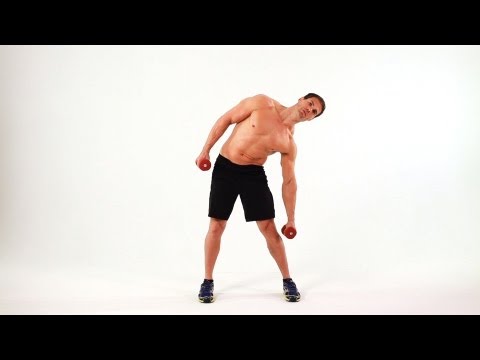
Use this when you want to isolate your obliques through lateral flexion instead of rotation. It’s a simple exercise, a single dumbbell and a lean to one side, but that simplicity makes it a good finisher after the more technical options on this list. I’d treat it as accessory work rather than a main exercise, running 3 sets of 12 to 15 reps per side at the end of a core or lower body session.
How to Perform Side Bends
- Stand tall holding a dumbbell in one hand at your side, palm facing your body.
- Let your other hand rest on your hip or behind your head.
- Bend directly sideways at your waist, lowering the dumbbell down your leg without leaning forward or back.
- Squeeze your obliques on the loaded side to pull your torso back to upright, then repeat.
Equipment: one dumbbell.
This video from Howcast shows how to perform the dumbbell side bend.
Tips for Side Bends
- Keep the movement in a straight sideways plane. Twisting your torso forward turns this into a different exercise entirely.
- Go lighter than your instinct tells you. This exercise loads your spine laterally, and heavy weight here isn’t worth the risk.
- Finish all reps on one side before switching, rather than alternating sides rep by rep.
- Stop the descent at the point where your torso starts to rotate instead of staying in a pure sideways bend.
Reasons to Choose a Russian Twist Alternative
There are a few good reasons to swap the Russian twist for one of the options above. None of them are a downgrade. Each one trains your obliques through rotation, anti-rotation, or lateral flexion, and a few of them let you load the movement heavier than a seated twist ever will.
- Your low back doesn’t like the seated position. The Pallof press and side plank take your spine out of a flexed, rotating position entirely while still hitting your obliques hard.
- You don’t have a plate or medicine ball. Bicycle crunches, side planks, and hanging oblique knee raises need little to no equipment at all.
- You want to add real load. The cable woodchopper and landmine rotation let you stack weight on the movement far past what’s practical for a seated twist.
- You’d rather resist rotation than create it. The Pallof press and plank with hip rotation train your core to stabilize against a twisting force, which carries over directly to squats and deadlifts.
- Your obliques have stalled. A new angle like the landmine rotation or hanging oblique knee raise gives your core a fresh stimulus after months on the same seated twist.
If your whole core needs more work beyond your obliques, see our guide to growing an underdeveloped core.
Muscles Worked by the Russian Twist
Your obliques run diagonally along the sides of your torso in two layers, and they’re the primary muscles behind every rotation and anti-rotation exercise on this list. The Russian twist and its alternatives train these muscles in slightly different ways depending on whether you’re rotating, resisting rotation, or bending laterally:
- External obliques: the primary mover in rotation, working hardest on the Russian twist, bicycle crunch, cable woodchopper, and landmine rotation as your torso turns from side to side.
- Internal obliques: work alongside the external obliques on every rotational exercise, and they’re the main stabilizer on anti-rotation exercises like the Pallof press and plank with hip rotation.
- Rectus abdominis: your “six-pack” muscle, active on nearly every exercise here but especially the bicycle crunch and hanging oblique knee raise, where hip flexion combines with the rotation.
- Transverse abdominis: the deep, corset-like muscle that braces your spine, doing most of its work on the side plank and Pallof press where the goal is holding a position steady.
- Hip flexors: assist on the bicycle crunch and hanging oblique knee raise, since both exercises combine hip flexion with rotation.
- Erector spinae and quadratus lumborum: stabilize your low back through every variation, working especially hard on the side bend, where they control the sideways lean.
For more on building this muscle group specifically, see our guide to growing underdeveloped obliques.
FAQs
What’s the closest alternative to a Russian twist?
The bicycle crunch. Both exercises rotate your torso side to side while your spine is flexed, just lying down instead of seated, so the movement pattern and muscle recruitment feel similar. If you want a standing version that still lets you add weight, the cable woodchopper is the closest loaded swap.
Can I build obliques without Russian twists?
Yes. Your obliques respond to being loaded through rotation, anti-rotation, or lateral flexion over time, and they don’t care whether that load comes from a cable, a barbell, or your own bodyweight. Any exercise on this list will build your obliques if you train it with enough volume and progress it, whether that means adding weight, adding reps, or slowing the tempo down.
What’s the best Russian twist alternative for a bad back?
The Pallof press and side plank are usually the friendliest, since neither one puts your spine into the flexed, loaded, rotating position that tends to cause trouble. If a specific exercise hurts, back off the range of motion or the load before you back off training your core altogether, and give your back a week or two of lighter work if something feels off.
What’s the best Russian twist alternative at home?
The bicycle crunch and side plank if you have no equipment at all, and the side bend if you’ve got a single dumbbell around. Between the three, you can train rotation, anti-rotation, and lateral flexion without ever needing a plate or a medicine ball.
Why do Russian twists hurt my lower back?
Usually it’s the combination of a flexed, leaned-back spine and rotation under load, which puts heavy stress on your lumbar discs at once, especially if your feet are lifted off the floor. If you get pain there, keep your feet down for more stability, drop the weight, or switch to an anti-rotation option like the Pallof press that trains the same muscles without the flexed, twisting spine position.
How many rotational core exercises should I do per workout?
One or two is usually enough on a day where you’re also squatting or deadlifting, since your obliques already get worked bracing against those lifts. On a dedicated core day, 2 to 3 exercises covering rotation, anti-rotation, and an isometric hold, like a landmine rotation, a Pallof press, and a side plank, will cover the muscle group well without piling on junk volume.
Key Takeaways
If your low back is the reason you’re avoiding Russian twists, start with the Pallof press or side plank before you try anything that rotates a flexed spine. If you want the closest loaded, standing swap, the cable woodchopper or landmine rotation will let you add far more resistance than a seated twist ever will. Training at home with nothing but your bodyweight, the bicycle crunch and side plank will still build real oblique strength over time. Pick based on your equipment and how your back feels, and progress the same way you’d progress a Russian twist: more weight, more reps, or a longer hold over time. You don’t need to run all 8 in one session. Two or three that fit your equipment and your goals will do more for your obliques than trying to cram every option into one workout.
Other Alternative Exercises
If you enjoyed this post, check out our other roundups of the best alternatives for other exercises.