The step-up is a unilateral lower body exercise where you drive your whole bodyweight onto an raised box or bench using a single leg, then step back down and repeat. You can do it with just bodyweight, a pair of dumbbells, or a barbell on your back, and box height usually runs anywhere from knee height to just above it. It trains your quads hardest, with a heavy dose of glutes and hamstrings on the hip extension at the top, and it adds a real balance and stability demand since you’re pushing your entire body up on one leg with no spot from the other.
You might want a change for a few reasons. Not every gym has a box tall enough, and a busy platform or step deck is often the first thing taken during peak hours. A high step-up can also load your knee hard right at end-range flexion when your thigh is past parallel, which some lifters feel in the front of the knee once the reps add up. Or maybe you’ve run step-ups for months and your legs have stopped responding, so you need a fresh angle to keep making progress.
Here are the 8 step-up alternatives I turn to most, picked for how well they still hit your quads and glutes one leg at a time, how safe they are on the knees, and what equipment they need. Some are near-identical unilateral swaps you could drop into the exact same program slot, and a couple trade off the balance demand for more raw load. I’ll tell you when to use each one and exactly how to do it.
Table of Contents
- 1 The 8 Best Step-Up Alternatives
- 2 Reasons to Choose a Step-Up Alternative
- 3 Muscles Worked by the Step-Up
- 4 FAQs
- 4.1 What’s the closest alternative to a step-up?
- 4.2 Can I build leg size without step-ups?
- 4.3 What’s the best step-up alternative for bad knees?
- 4.4 What’s the best step-up alternative at home?
- 4.5 Why can’t I balance on a step-up or single-leg exercise?
- 4.6 How many single-leg exercises should I do per workout?
- 5 Key Takeaways
- 6 Other Alternative Exercises
- 6.1 The 10 Best Bench Press Alternatives
- 6.2 The 10 Best Front Squat Alternatives
- 6.3 The 9 Best Leg Press Alternatives
- 6.4 The 10 Best Bulgarian Split Squat Alternatives
- 6.5 The 9 Best Seated Cable Row Alternatives (2026)
- 6.6 The 8 Best Decline Bench Press Alternatives
- 6.7 The 10 Best Box Jump Alternatives
- 6.8 The 10 Best Glute Bridge Alternatives
- 6.9 The 10 Best Pallof Press Alternatives
- 6.10 The 8 Best Tricep Dip Alternatives
- 6.11 The 10 Best Lying Leg Curl Alternatives
- 6.12 The 10 Best Overhead Press Alternatives
- 6.13 The 9 Best Barbell Row Alternatives
- 6.14 The 8 Best Incline Bench Press Alternatives
- 6.15 The 8 Best Hammer Curl Alternatives
The 8 Best Step-Up Alternatives
- Bulgarian Split Squat
- Reverse Lunge
- Walking Lunge
- Split Squat
- Curtsy Lunge
- Lateral Lunge
- Single-Leg Leg Press
- Pistol Squat
1. Bulgarian Split Squat
When to Perform Bulgarian Split Squats
This is the closest swap I’ve got for a step-up. Your rear foot rests on a bench instead of stepping up onto one, but you still get the same single-leg quad and glute demand and the same balance challenge, without needing a box at all. Use it when your gym’s step platforms are always taken, when a step-up bothers your front knee at the top, or when you want more load than you can safely step up with. I usually program it for 3 sets of 8 to 10 reps per leg, either as your main leg exercise or right after a bilateral squat or deadlift.
How to Perform Bulgarian Split Squats
- Stand a couple feet in front of a bench, holding a dumbbell in each hand at your sides.
- Rest the top of one foot on the bench behind you, laces down.
- Lower your back knee toward the floor until your front thigh is close to parallel with the ground.
- Drive through your front foot to stand back up, keeping most of your weight there rather than on your back foot.
Equipment: a bench and a pair of dumbbells (a barbell on your back works too once you’ve got the balance down).
This video from ScottHermanFitness shows how to perform the Bulgarian split squat.

Tips for Bulgarian Split Squats
- Find your front foot position first, roughly a big step and a half from the bench, before you worry about depth.
- Keep your front shin fairly vertical instead of letting your knee drift way out past your toes.
- Start with your bodyweight or light dumbbells. The balance demand alone is a real challenge the first few sessions.
- If your hip flexors feel tight on the back leg, lower the bench height or use a shorter step underneath your back foot instead.
If you want more depth on how this compares to the step-up and other quad-focused options, see our Bulgarian split squat benefits and muscles worked guide. And if you like the angle but want to rotate this one out too, we’ve got a full Bulgarian split squat alternatives list of its own.
2. Reverse Lunge
When to Perform Reverse Lunges
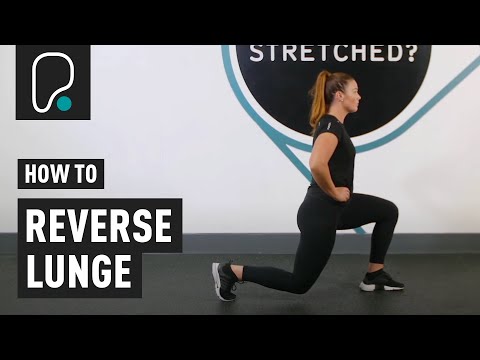
- Stand tall holding a dumbbell in each hand, or with your hands empty if you’re just starting out.
- Step one foot back and lower your back knee toward the floor, keeping most of your weight on your front leg.
- Stop when your front thigh is close to parallel with the ground and your back knee hovers just above the floor.
- Push through your front foot to stand back up and step your back foot in to return to the start.
I’d reach for this one when a step-up is too much on your front knee, since stepping backward instead of up puts far less shear force through the joint. It’s also the easiest single-leg option to teach a beginner, since there’s no box height to worry about and no coordination needed to find the platform with your foot. Run it for 3 sets of 10 to 12 reps per leg on a lower body day, or drop the load and use it as a warm-up before heavier squatting.
How to Perform Reverse Lunges
Equipment: none required, though a pair of dumbbells adds load once bodyweight gets easy.
This video from PureGym shows how to perform the reverse lunge.
Tips for Reverse Lunges
- Step back far enough that your front knee stays roughly over your ankle at the bottom, not out past your toes.
- Keep your torso upright instead of leaning forward over your front leg.
- Push evenly through your whole front foot, not just your toes.
- Take a moment to reset your balance between reps rather than rushing straight into the next one.
3. Walking Lunge
When to Perform Walking Lunges
This is the option I use when I want the single-leg demand of a step-up but with some forward momentum built in, which makes it feel more athletic and carries over better to sports that involve running or cutting. It also lets you cover distance across a turf strip or open floor space instead of needing a fixed box. Program it for 3 sets of 10 to 12 steps per leg, and don’t be surprised if it leaves your legs more sore than a stationary single-leg exercise does, since your muscles are working through a longer range under load.
How to Perform Walking Lunges
- Stand tall holding a dumbbell in each hand.
- Step forward with one leg and lower your back knee toward the floor, keeping most of your weight on your front leg.
- Drive through your front foot to stand up and step through, bringing your back foot forward into the next lunge instead of returning to standing.
- Repeat, alternating legs as you move forward.
Equipment: dumbbells or a barbell, and enough open floor to walk 10 to 20 feet.
This video from Buff Dudes Workouts shows how to perform the walking lunge.

Tips for Walking Lunges
- Take a step long enough to let your front knee track over your ankle, not so long that you’re stuck fighting to stand back up.
- Keep your chest up and your torso stacked over your hips through the whole step.
- Go a size lighter than your reverse lunge weight at first, since the forward momentum adds a stability challenge.
- Count reps per leg, not total steps, so both sides get even work.
For more lunge variations to rotate through, check out our lunge alternatives roundup.
4. Split Squat
When to Perform Split Squats
The split squat is a stationary version of the lunge, and I like it as the option for anyone who wants the unilateral loading of a step-up without the added coordination of stepping onto a box or covering ground. Both feet stay planted the whole set, so it’s easier to get tight and control your knee position, and it’s a good starting point if you’re newer to single-leg training. Run it for 3 sets of 8 to 12 reps per leg as a main lower body exercise, or use lighter loads for higher reps as a finisher.
How to Perform Split Squats
- Set your feet in a staggered stance, one foot well in front of the other, holding a dumbbell in each hand.
- Lower straight down, letting your back knee drop toward the floor and your front knee bend.
- Stop just before your back knee touches the ground.
- Drive through your front foot to return to the starting height, keeping both feet planted throughout.
Equipment: dumbbells, or a barbell on your back once you’re comfortable with the stance.
This video from E3 Rehab shows how to perform the split squat.

Tips for Split Squats
- Set your stance length before you add weight. Too short and you’ll run out of room, too long and you’ll feel it in your hip flexors instead of your legs.
- Keep your front heel down through the whole rep.
- Raise your front foot on a small plate if you want more range and a deeper stretch on your glutes.
- Brace your core the same way you would on a regular squat. A staggered stance doesn’t mean you can skip bracing.
Not sure whether to pick this over a lunge? Our split squat vs lunge comparison breaks down the differences.
5. Curtsy Lunge
When to Perform Curtsy Lunges
Reach for this one when you want to hit your glute medius, the muscle on the side of your hip that a straight-ahead step-up mostly skips. Stepping your back leg diagonally behind and across your body puts your hip into a rotated position that lights up that outer glute, which makes this a good pick if you deal with knee tracking issues or want more hip stability work. Keep the load lighter than your other single-leg exercises and program it for 3 sets of 10 to 12 reps per leg.
How to Perform Curtsy Lunges
- Stand tall holding a light dumbbell in each hand, or no weight at all when you’re learning it.
- Step one leg diagonally behind and across your body, so your feet end up crossed.
- Bend both knees to lower your back knee toward the floor, keeping your hips facing forward.
- Push through your front foot to stand back up and return your back foot to the start.
Equipment: none required, though light dumbbells work once the pattern feels natural.
This video from Mind Pump TV shows how to perform the curtsy lunge.

Tips for Curtsy Lunges
- Keep your hips and chest facing forward the entire rep instead of letting your torso rotate with your back leg.
- Take a smaller step back than you would on a reverse lunge. The diagonal angle needs less distance.
- Go slow on the way down. This isn’t an exercise you want to rush through.
- Skip the weight entirely for your first few sessions and get the footwork comfortable first.
6. Lateral Lunge
When to Perform Lateral Lunges
A step-up trains you almost entirely in the sagittal plane, straight forward and back, so I like adding a lateral lunge to cover the side-to-side movement most programs miss. It loads one leg at a time while your other leg stays straight, which hits your adductors hard on the working side and your glutes on the stretched side. This one’s great for anyone who plays a field or court sport, or anyone who’s noticed their hips feel stiff moving sideways. Run 3 sets of 8 to 10 reps per leg.
How to Perform Lateral Lunges
- Stand with your feet together, holding a single dumbbell or kettlebell at your chest if you’re loading it.
- Take a wide step directly out to one side.
- Bend that knee and push your hips back to lower into the lunge, keeping your other leg straight.
- Push off the bent leg to return to standing with your feet together.
Equipment: none required, though a dumbbell or kettlebell held at your chest adds load.
This video from JeremyScottFitness shows how to perform the lateral lunge.

Tips for Lateral Lunges
- Keep your toes pointed forward on both feet, not angled out, so the stretch loads your adductors correctly.
- Sit your hips back like you’re doing a single-leg version of a squat, rather than just bending your knee forward.
- Keep your straight leg’s foot flat on the floor instead of letting your heel pop up.
- Start with a shorter step than you think you need. You can always widen it once the pattern feels solid.
7. Single-Leg Leg Press
When to Perform the Single-Leg Leg Press
This is my pick when you want the unilateral loading of a step-up without any of the balance demand, since the machine supports your whole body and all you have to focus on is pushing the weight. It’s a good option if you’re coming back from an ankle or knee issue and want to build strength safely, or if you just want to load one leg heavier than you could ever manage while balancing free-standing. I’ll run this for 3 sets of 10 to 15 reps per leg near the end of a leg day.
How to Perform the Single-Leg Leg Press
- Sit in the leg press machine and place one foot in the middle of the platform, shoulder-width or slightly narrower.
- Keep your other foot off the platform, resting it on the frame or letting it hang.
- Release the safeties and lower the platform until your knee reaches about a 90 degree angle.
- Press through your working foot to extend your leg back to the start, without locking your knee out hard.
Equipment: a leg press machine.
This video from Buff Dudes Workouts shows how to perform the single-leg leg press.

Tips for the Single-Leg Leg Press
- Cut the weight roughly in half compared to your two-leg press before you start, then adjust from there.
- Keep your hips square on the seat instead of twisting toward your working leg.
- Don’t let your knee cave inward as you press. Track it in line with your toes.
- Place your foot a little higher on the platform if you want more glute and hamstring involvement, lower if you want more quad focus.
For more machine-based single-leg options, see our leg press alternatives guide.
8. Pistol Squat
When to Perform Pistol Squats
This is the hardest exercise on the list and the one that demands the most balance, mobility, and single-leg strength of anything here, including the step-up itself. Your whole bodyweight loads onto one leg through a full squat range while your other leg stays extended out in front of you, so it takes real ankle and hip mobility to do it with good form. Use it once you’ve built a strong base with split squats and lunges, and treat it as a skill you build over weeks, not something you just add to a program cold. Start with 2 to 3 sets of 3 to 5 reps per leg, using a box behind you or a doorframe to hold onto for support while you learn it.
How to Perform Pistol Squats
- Stand on one leg and extend your other leg straight out in front of you, off the floor.
- Reach your arms forward for balance as you begin to lower.
- Bend your standing knee and push your hips back, lowering until your hips are close to your heel while keeping your extended leg off the floor.
- Drive through your standing foot to press back up to a full standing position.
Equipment: none, though a box, bench, or doorframe to hold for support is a smart place to start.
This video from School of Calisthenics shows how to perform the pistol squat, including the progressions to build up to a full one.
![How To PISTOL SQUAT [Full Progressions] // School of Calisthenics](https://i.ytimg.com/vi/hHxm3VbuS-w/0.jpg)
Tips for Pistol Squats
- Hold onto a doorframe, rack, or TRX strap while you’re learning, and let go only once you can control the full range unassisted.
- Sit onto a low box first if you can’t reach full depth. Build the range up over weeks instead of forcing it.
- Keep your heel down the whole rep. If it lifts off the floor, your ankle mobility, not your leg strength, is the limiting factor.
- Don’t chase reps here. Three or four clean ones per leg beats ten sloppy ones.
Reasons to Choose a Step-Up Alternative
There are a few good reasons to swap the step-up for one of the options above. None of them are a downgrade. Each one still hits your quads and glutes hard one leg at a time, and a couple let you load heavier or move through a bigger range than a step-up ever will.
- You don’t have a box or bench tall enough. The reverse lunge, walking lunge, curtsy lunge, and lateral lunge all need nothing but floor space.
- Step-ups bother your front knee. The split squat and single-leg leg press keep your knee tracking under more control since your stance or the machine stabilizes the movement for you.
- You want more load than you can safely step up with. The Bulgarian split squat and single-leg leg press both let you push heavier weight than a step-up can handle.
- You want to train outside the straight-ahead plane. The lateral lunge and curtsy lunge load your hips from angles a step-up skips entirely.
- You’re chasing a bodyweight skill. The pistol squat builds single-leg strength, balance, and mobility all at once, without needing any equipment.
Muscles Worked by the Step-Up
The step-up is a single-leg, closed-chain exercise, so almost every muscle from your hip to your ankle has to work to get your body up onto the box and keep you balanced while it does. The alternatives above train that same chain, just with different amounts of emphasis depending on the stance and range of motion.
- Quadriceps: the primary mover on every exercise in this list, working hardest to straighten your knee and drive you up out of the bottom position. This is loaded heaviest on the split squat, Bulgarian split squat, and single-leg leg press.
- Glutes: heavily involved in the hip extension at the top of every rep, and the main target of the curtsy lunge and lateral lunge, which load your glute medius from the side rather than straight on.
- Hamstrings: assist with hip extension throughout, and pick up more work on the reverse lunge and walking lunge, where your back leg has to control the descent.
- Adductors: the primary muscles that get stretched and loaded on the lateral lunge, and they’re active as stabilizers on every other exercise here too.
- Calves: work isometrically to keep you balanced on one foot, especially on the pistol squat and Bulgarian split squat, where your front foot is doing all the balancing.
- Core and hip stabilizers: your obliques, hip abductors, and deep hip rotators all fire to keep your pelvis level while one leg carries the full load, which is why single-leg exercises tend to feel harder on your core than a bilateral squat at the same weight.
If you want to round out your leg training with machine-based options that hit these same muscles with less balance demand, see our gym machines for legs guide.
FAQs
What’s the closest alternative to a step-up?
The Bulgarian split squat. It’s a single-leg exercise with the same balance demand and the same quad and glute emphasis, and it needs a bench instead of a box, which most gyms have plenty of. If your gym’s step platforms are always taken, this is the one I’d grab first.
Can I build leg size without step-ups?
Yes. Your quads and glutes grow from being loaded through a full range with enough volume over time, and they don’t care whether that load comes from a box, a bench, a machine, or your own bodyweight. Any exercise on this list will build real leg size if you train it hard and progress the weight or reps over time.
What’s the best step-up alternative for bad knees?
The split squat and single-leg leg press are usually the friendliest, since both keep your knee tracking under more control than a free-standing step-up or lunge does. If a specific exercise causes pain, shorten the range of motion before you drop the weight, and give the joint a week or two of lighter loading before pushing it hard again.
What’s the best step-up alternative at home?
The reverse lunge, walking lunge, curtsy lunge, and lateral lunge all need nothing but floor space, and the pistol squat is a true no-equipment option once you’ve built up to it. Between those, you can train every angle of your legs without ever needing a bench or a box.
Why can’t I balance on a step-up or single-leg exercise?
Usually it’s a lack of practice under load rather than a mobility problem. Single-leg balance is a skill your body adapts to fast, but only if you train it regularly. Start with the split squat or single-leg leg press, both of which remove most of the balance demand, and work your way up to Bulgarian split squats, lunges, and eventually a pistol squat as your stability improves.
How many single-leg exercises should I do per workout?
One or two is usually enough on a day where you’re also squatting or deadlifting, since your legs already get plenty of work from the bilateral lifts. On a leg day built around single-leg training, 2 to 3 exercises covering different angles, like a Bulgarian split squat, a lateral lunge, and a single-leg leg press, will cover your quads, glutes, and adductors without piling on junk volume.
Key Takeaways
If you want the closest swap for a step-up, go with the Bulgarian split squat. It matches the balance demand and lets you load it just as heavy, or heavier, without needing a box. If your knee is the reason you’re looking for an alternative in the first place, start with the split squat or single-leg leg press before trying anything that leans harder on balance. Training at home with nothing but floor space, rotate through reverse lunges, walking lunges, curtsy lunges, and lateral lunges to cover every angle your legs need. And if you’re chasing the pistol squat as a goal, build up to it with split squats and Bulgarian split squats first rather than grinding away at it before your hips and ankles are ready. Pick two or three of these based on your equipment and how your knees feel, and progress them the same way you’d progress a step-up: more weight, more reps, or a bigger range over time.
Other Alternative Exercises
If you enjoyed this post, check out our other roundups of the best alternatives for other exercises.