The tricep pushdown is a cable exercise where you pin your elbows to your sides and extend them against resistance from a high pulley, using a straight bar, rope, or single handle attachment. Your elbows stay locked in place the whole set, so almost all the work falls on your triceps instead of your shoulders or chest. It’s a staple isolation exercise for a reason, and most people run it for 3 sets of 12 to 15 reps at the end of a push day, once the heavier pressing is done.
You might want a substitute for a few practical reasons. Not every gym has an open cable station, and the pushdown spot tends to be one of the most crowded in the building during peak hours. You might train at home with a rack and dumbbells but no cable stack at all, or you’re working out of a hotel gym that only has a few dumbbells and a bench. Or you’ve been running pushdowns for months, your triceps have stopped growing from them, and your elbows or wrists start to complain the same way they always do once the reps pile up week after week.
Here are the 8 tricep pushdown alternatives I’d reach for, ranked by how closely they match the pushdown’s cable, elbow-locked feel and how well they hold up across different equipment. A few are direct swaps you could run in the exact same program slot. Others are heavier compound options for building strength, and bodyweight exercises for when you’re stuck without a gym. I’ll tell you when to use each one and exactly how to perform it.
Table of Contents
- 1 The 8 Best Tricep Pushdown Alternatives
- 2 Reasons to Choose a Tricep Pushdown Alternative
- 3 Muscles Worked by the Tricep Pushdown
- 4 FAQs
- 4.1 What’s the closest alternative to a tricep pushdown?
- 4.2 Can I build tricep size without a cable machine?
- 4.3 What’s the best tricep pushdown alternative for bad elbows?
- 4.4 What’s the best tricep pushdown alternative at home?
- 4.5 Why does the tricep pushdown bother my wrists or elbows?
- 4.6 How many tricep exercises should I do per workout?
- 5 Key Takeaways
- 6 Other Alternative Exercises
- 6.1 The 10 Best Box Jump Alternatives
- 6.2 The 9 Best Barbell Row Alternatives
- 6.3 The 10 Best Pallof Press Alternatives
- 6.4 The 9 Best Pendlay Row Alternatives
- 6.5 The 10 Best Plank Alternatives
- 6.6 The 10 Best Front Squat Alternatives
- 6.7 The 9 Best Leg Press Alternatives
- 6.8 The 10 Best Lat Pulldown Alternatives
- 6.9 The 10 Best Bulgarian Split Squat Alternatives
- 6.10 The 10 Best Bench Press Alternatives
- 6.11 The 8 Best Hammer Curl Alternatives
- 6.12 The 10 Best Romanian Deadlift Alternatives
- 6.13 The 9 Best Lunge Alternatives
- 6.14 The 9 Best Seated Cable Row Alternatives (2026)
- 6.15 The 10 Best Hack Squat Alternatives
The 8 Best Tricep Pushdown Alternatives
- Single-Arm Cable Pushdown
- Resistance Band Pushdown
- Overhead Cable Rope Extension
- Skull Crusher
- Dumbbell Tricep Kickback
- Close-Grip Bench Press
- JM Press
- Bench Dip
1. Single-Arm Cable Pushdown
When to Perform Single-Arm Cable Pushdowns
This is the closest swap there is, since it’s the exact same cable, elbow-locked movement just done one arm at a time. Use it when you want to fix a left-right strength imbalance, when the double-handle pushdown station is taken but a single stack cable is free, or when you want a harder core and grip challenge from resisting rotation. I’ll usually run this for 3 sets of 10 to 12 reps per arm, either in the same spot a two-handed pushdown would sit or as a finisher after a heavier pressing exercise.
How to Perform Single-Arm Cable Pushdowns
- Attach a single handle to a high pulley and stand facing the stack with your working side closest to it.
- Grab the handle with an overhand grip and pin your elbow to your side, forearm parallel to the floor.
- Extend your elbow to press the handle down until your arm is straight, keeping your torso still.
- Let the handle return under control back to the starting position.
Equipment: cable machine, single handle attachment.
This video from OriGym shows how to perform the single-arm tricep pushdown.

Tips for Single-Arm Cable Pushdowns
- Keep your torso square to the machine instead of twisting toward your working arm as the weight gets heavier.
- Brace your free hand on your hip or the machine frame for a stable base.
- Match the reps and weight on both sides over time so you don’t build a lasting imbalance.
- Slow the return phase down instead of letting the cable snap your arm back up.
For more single-joint tricep-only options like this one, see our isolation tricep exercises guide.
2. Resistance Band Pushdown
When to Perform Resistance Band Pushdowns
Reach for this any time you don’t have access to a cable machine at all, whether that’s a home gym, a hotel room, or a commercial gym where every pushdown station is taken. A band anchored overhead mimics the pushdown’s downward cable pull closely enough that the exercise feels almost identical once you’re a rep or two in. I run this for 3 sets of 15 to 20 reps, since bands get easier at the top of the rep and harder at the bottom, so higher reps let you find a real working set.
How to Perform Resistance Band Pushdowns
- Anchor a resistance band to a door, rack, or overhead point at about head height.
- Grab both ends of the band with an overhand grip and pin your elbows to your sides.
- Step back until the band has tension, then extend your elbows to press the band down until your arms are straight.
- Let the band return under control back to the starting position without your elbows drifting forward.
Equipment: one resistance band, anchor point.
This video from Rogue Fitness shows how to perform the banded tricep pushdown.

Tips for Resistance Band Pushdowns
- Pick a band with enough tension that the last few reps of each set are genuinely hard, not just going through the motion.
- Keep your elbows pinned at your sides the same way you would on a cable pushdown.
- Loop the band lower on the anchor for more resistance, or higher for less, since band tension changes with anchor height.
- Pack two or three bands of different resistance in a bag so you always have a working option on the road.
3. Overhead Cable Rope Extension
When to Perform Overhead Cable Rope Extensions
Use this once you want more stretch on your triceps than a pushdown gives you, since your elbows travel overhead instead of staying at your sides. That different angle biases the long head of your triceps, the head a pushdown trains the least. I like it as a second tricep exercise on arm day, run after pushdowns or another elbow-locked movement. Stick to 3 to 4 sets of 12 to 15 reps here, since the constant cable tension works well at higher reps.
How to Perform Overhead Cable Rope Extensions
- Attach a rope to a high pulley and face away from the stack, standing a foot or two in front of it.
- Grab the rope with both hands, palms facing each other, and step forward to create tension.
- Bend your elbows so your hands drop behind your head, keeping your upper arms pointed forward and still.
- Extend your elbows to press the rope forward and up, spreading the ends slightly at full extension.
Equipment: cable machine, high pulley, rope attachment.
This video from Live Lean TV Daily Exercises shows how to perform the standing high pulley overhead cable triceps extension with rope.

Tips for Overhead Cable Rope Extensions
- Keep your upper arms fixed in place. Letting them drift forward turns this into a shoulder exercise.
- Lean forward slightly from the hips to keep the cable path in line with your arms.
- Spread the rope apart at the top of each rep for a harder peak contraction.
- Set the pulley as high as it goes so you get a full stretch behind your head at the bottom.
Want more cable-only options? See our cable tricep exercises roundup.
4. Skull Crusher
When to Perform Skull Crushers
This is the heaviest isolation option on the list, since lying on a bench lets you load an EZ bar or barbell far past what a cable stack tops out at. Use it when you want to build real tricep strength and size instead of just pumping out reps, or any time the cable stations are all busy but a bench and a bar are open. I’d program 3 sets of 8 to 12 reps here, treating it as a strength-building exercise rather than a finisher.
How to Perform Skull Crushers
- Lie on a flat bench holding an EZ bar or barbell with a shoulder-width grip, arms extended straight up over your chest.
- Keep your upper arms still and pointed toward the ceiling.
- Bend your elbows to lower the bar toward your forehead, stopping just short of touching.
- Extend your elbows to press the bar back up to the starting position.
Equipment: EZ bar or barbell, flat bench.
This video from ScottHermanFitness shows how to perform the skull crusher.

Tips for Skull Crushers
- Keep your elbows pointed at the ceiling through the whole rep instead of letting them flare out to the sides.
- Start light. The stretched position at the bottom is where most people get hurt.
- Use an EZ bar over a straight barbell if your wrists don’t love the angle.
- Control the lowering phase, since that’s where your triceps get the most benefit.
For a full breakdown of how this stacks up against a straight-bar extension, see our tricep extension vs skull crusher comparison.
5. Dumbbell Tricep Kickback
When to Perform Dumbbell Tricep Kickbacks
This is a good pick when you want an exercise that needs almost no setup and no cable machine at all, just a single dumbbell and a bench. The bent-over position puts your triceps under the most tension right at full extension, which is the same lockout point a pushdown finishes on. I use it as a finisher at the end of an arm day, or as a way to work sore elbows back into training after time off. Keep it to 2 or 3 sets of 12 to 20 light reps rather than treating it like a strength exercise.
How to Perform Dumbbell Tricep Kickbacks
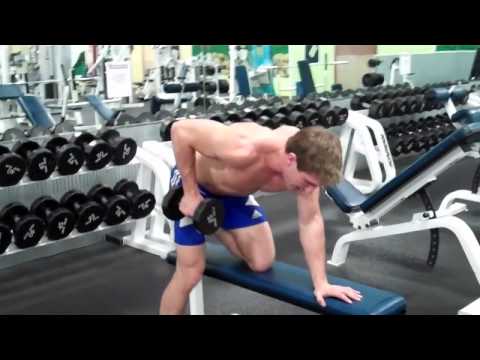
- Hold a dumbbell in one hand, hinge at the hips, and brace your other hand on a bench.
- Keep your upper arm parallel to the floor and tucked against your side.
- Extend your elbow to press the dumbbell straight back until your arm is fully straight.
- Bend your elbow to lower the dumbbell back to the starting position, keeping your upper arm still.
Equipment: one dumbbell and a bench.
This video from ScottHermanFitness shows how to perform the dumbbell tricep kickback.
Tips for Dumbbell Tricep Kickbacks
- Keep your upper arm locked in place. If it swings, you’re using momentum instead of your triceps.
- Use a lighter weight than you think you need. The exercise loses most of its resistance once your arm passes horizontal.
- Squeeze hard at full extension for a full second before lowering.
- Keep your neck neutral by looking at the floor a few feet in front of you.
6. Close-Grip Bench Press
When to Perform the Close-Grip Bench Press
This is the best option when you want a heavy compound exercise that still trains your triceps hard, rather than a single-joint isolation exercise. It’s a solid main lift on a push day, and it builds pressing strength that carries over to your regular bench press. Use it when your gym’s cable stations are packed but a bench and rack are free, or any time you want to add real load to your triceps instead of just accumulating volume. I’d program 3 to 5 sets of 5 to 8 reps for strength, or 8 to 10 reps for size.
How to Perform the Close-Grip Bench Press
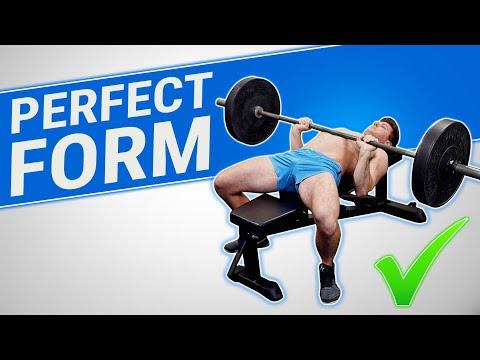
- Lie on a bench and grip the bar just inside shoulder width, wrapping your thumbs around it.
- Unrack the bar and hold it directly over your shoulders.
- Lower the bar to your lower chest, keeping your elbows tucked close to your torso.
- Press the bar back up to lockout, driving through your palms.
Equipment: barbell, bench, rack.
This video from ScottHermanFitness shows how to perform the close-grip bench press.
Tips for the Close-Grip Bench Press
- Keep your elbows at roughly a 30 to 45 degree angle from your torso, not flared out to 90.
- Use a grip just inside shoulder width. Too narrow and your wrists take the strain instead of your triceps.
- Expect to lift less than your regular bench press, since your chest and shoulders do less of the work.
- Touch the bar to roughly nipple height rather than higher on your chest, which keeps the bar path in a straight line over your shoulders.
7. JM Press
When to Perform the JM Press
This one sits between a close-grip bench press and a skull crusher, and it hits the elbow lockout position hard, which is often the weak point in a bench press. Use it when you want heavier loading than a skull crusher allows but still want more elbow flexion than a straight close-grip bench gives you. I like it for lifters chasing a bigger bench press specifically. Stick to 3 sets of 6 to 10 reps here, and don’t grind out sloppy reps once the bar path starts drifting.
How to Perform the JM Press
- Set up like a close-grip bench press with a barbell or EZ bar held over your shoulders.
- Lower the bar toward the base of your neck or top of your chest, letting your elbows travel down and slightly forward as they bend.
- Stop when the bar is about an inch from touching, keeping your elbows under control.
- Press the bar back up along the same path to lockout.
Equipment: barbell or EZ bar and a rack.
This video from Total Fitness Bodybuilding shows how to perform the JM press.

Tips for the JM Press
- Start light. The bar path is unfamiliar even for experienced lifters.
- Keep your wrists stacked over your elbows the whole rep, don’t let them roll back.
- Think of it as a cross between a skull crusher and a close-grip bench, not a full bench press.
- Use a spotter or safety pins on the first few sessions until you’re confident in the bar path.
8. Bench Dip
When to Perform Bench Dips
This is your best no-cable, minimal-equipment option, since all you need is a single bench or sturdy chair. Your triceps do most of the work at the top of the rep, right around the same lockout point a pushdown trains. I use this when I’m traveling or training somewhere without a cable stack at all. Bodyweight reps in the 10 to 15 range work well to start, and once that’s easy for multiple sets, propping your feet on a second bench or adding a plate across your lap will keep it challenging.
How to Perform Bench Dips
- Sit on the edge of a bench and place your hands next to your hips, fingers pointed forward.
- Walk your feet out and lower your hips off the front of the bench, supporting your weight on your arms.
- Bend your elbows to lower your body until your upper arms are about parallel to the floor.
- Press through your palms to straighten your elbows and return to the starting position.
Equipment: one bench or sturdy chair.
This video from Fit Father Project shows how to perform bench dips.

Tips for Bench Dips
- Keep your hips close to the bench through the whole rep instead of drifting forward.
- Stop the descent if you feel any pinching in your shoulders, and shorten the range instead of forcing it.
- Raise your feet on a second bench once bodyweight reps stop being a challenge.
- Add a weight plate across your lap for extra resistance once the basic version gets easy.
If bench dips bother your shoulders, see our tricep dip alternatives for other options.
Reasons to Choose a Tricep Pushdown Alternative
There are a few good reasons to swap the tricep pushdown for one of the options above. None of them are a downgrade, and a couple of them let you load your triceps heavier than a cable stack ever will. Run through the list below and pick the one that matches the problem you’re actually trying to solve.
- You don’t have access to a cable machine. Bands, dumbbells, a bench, and a barbell all cover you at home or on the road.
- The pushdown station is always taken. A resistance band or dumbbell kickback needs zero waiting.
- You want more stretch on your triceps. The overhead cable rope extension and skull crusher load the long head, a head the elbows-at-your-sides pushdown barely touches.
- You want to add real strength. The close-grip bench press and JM press let you load far heavier than any pushdown variation.
- Your triceps have stalled. A fresh angle like the single-arm pushdown or skull crusher gives your arms a new stimulus after months on the same lift.
Muscles Worked by the Tricep Pushdown
Your triceps brachii sits on the back of your upper arm and has three heads that all cross the elbow joint, but only the long head also crosses the shoulder joint. Because a tricep pushdown keeps your elbows pinned at your sides instead of overhead, it biases the lateral and medial heads more than the long head, which is why exercises like the overhead cable rope extension and skull crusher earn a spot on this list. If your triceps look flat from the side despite years of pushdowns, an undertrained long head is usually the reason, and it’s worth rotating in one of the overhead options above for a block or two. The pushdown and its alternatives train these three heads along with a few supporting muscles.
- Triceps brachii, lateral head: the primary target on a straight-bar or single-arm pushdown, and what gives the outside of your arm its horseshoe shape.
- Triceps brachii, medial head: works hard on every pushdown variation and stays active through pressing movements like the close-grip bench and JM press.
- Triceps brachii, long head: undertrained by the pushdown itself since your arm never goes overhead, but hit hard by the rope extension, skull crusher, and kickback.
- Anconeus: a small muscle at the back of the elbow that assists with lockout on every exercise on this list, though it’s too small to train directly.
- Wrist flexors and extensors: work isometrically to keep your grip on the bar, band, or dumbbell stable, especially on heavier lifts like the close-grip bench and JM press.
- Anterior deltoids: get some secondary work on the overhead rope extension and close-grip bench press, since your shoulders help stabilize your arms in those positions.
For more on training the triceps by head, see our guides to long head tricep exercises, lateral head tricep exercises, and medial head tricep exercises.
FAQs
What’s the closest alternative to a tricep pushdown?
The single-arm cable pushdown or the resistance band pushdown. Both keep the same elbows-pinned, downward cable pull a two-handed pushdown trains, just through a different attachment or piece of equipment. If I had to pick one, I’d start with the band version since it needs almost no setup.
Can I build tricep size without a cable machine?
Yes. Your triceps grow from loading them through a full range with enough volume over time, and they don’t care whether that load comes from a cable, a band, a dumbbell, or a barbell. Any exercise on this list will build your triceps if you train it hard and progress it, whether that means adding weight, adding reps, or slowing the tempo down.
What’s the best tricep pushdown alternative for bad elbows?
The dumbbell tricep kickback and bench dip are usually the friendliest, since neither one loads your elbow at a deep stretch or under a heavy locked bar. If a specific exercise hurts, back off the range of motion before you back off the weight, and give the joint a week or two of lighter loading before you push it hard again.
What’s the best tricep pushdown alternative at home?
The resistance band pushdown if you’ve got a band and a door to anchor it to, and the bench dip or dumbbell kickback if you don’t. Between the three, you can cover your whole triceps without ever needing a cable stack.
Why does the tricep pushdown bother my wrists or elbows?
Usually it’s a straight-bar attachment forcing your wrists into a fully pronated grip under load, combined with your elbows locked in the same position for every rep. Switch to a rope or single handle for a more natural wrist angle, or drop the pushdown for a session and run the resistance band version or dumbbell kickback instead.
How many tricep exercises should I do per workout?
One or two is usually enough on a day where you’re also pressing, since your triceps already get worked by the bench press, overhead press, or dips before you isolate them. On a dedicated arm day, 2 to 3 tricep exercises covering different angles, like a pushdown, an overhead extension, and a close-grip press, will cover the muscle well without piling on junk volume.
Key Takeaways
If you want the closest swap, go with the single-arm cable pushdown when a station opens up, or the resistance band pushdown when it never will. If you’re chasing more stretch on your long head, the overhead cable rope extension or skull crusher will do more for that than any pushdown variation. Training at home or on the road with next to nothing, the bench dip and dumbbell kickback will still build real triceps size over time. And if you want to add serious strength, the close-grip bench press or JM press will let you load heavier than a cable stack ever will. Pick based on your equipment and how your elbows feel, and progress it the same way you’d progress a pushdown: more weight or more reps over time. You don’t need all 8 in one program. Two or three that fit your equipment and your goals will do more for your triceps than trying to cram every option in. Rotate one of the heavier options into your routine every few months, and your triceps will keep responding long after a straight diet of pushdowns stops working.
Other Alternative Exercises
If you enjoyed this post, check out our other roundups of the best alternatives for other exercises.